A staged work experience exploring boundary collapse in remote work
Overview
Remote work blurs the boundary between work and everyday life.
Without a clear signal to stop, work often continues — even when the environment no longer supports it.
This project investigates how people behave in such conditions through a staged, time-based experience.
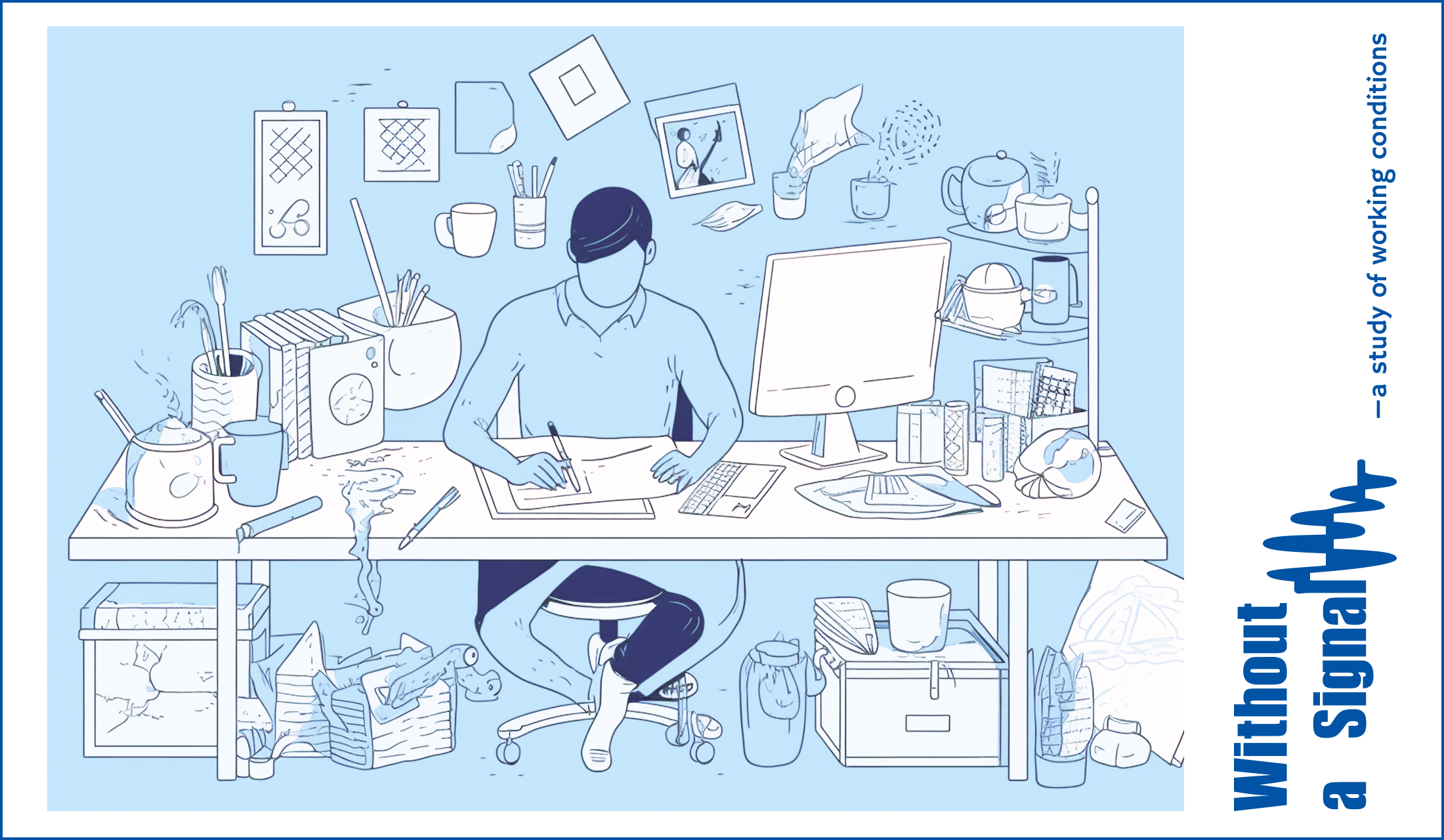
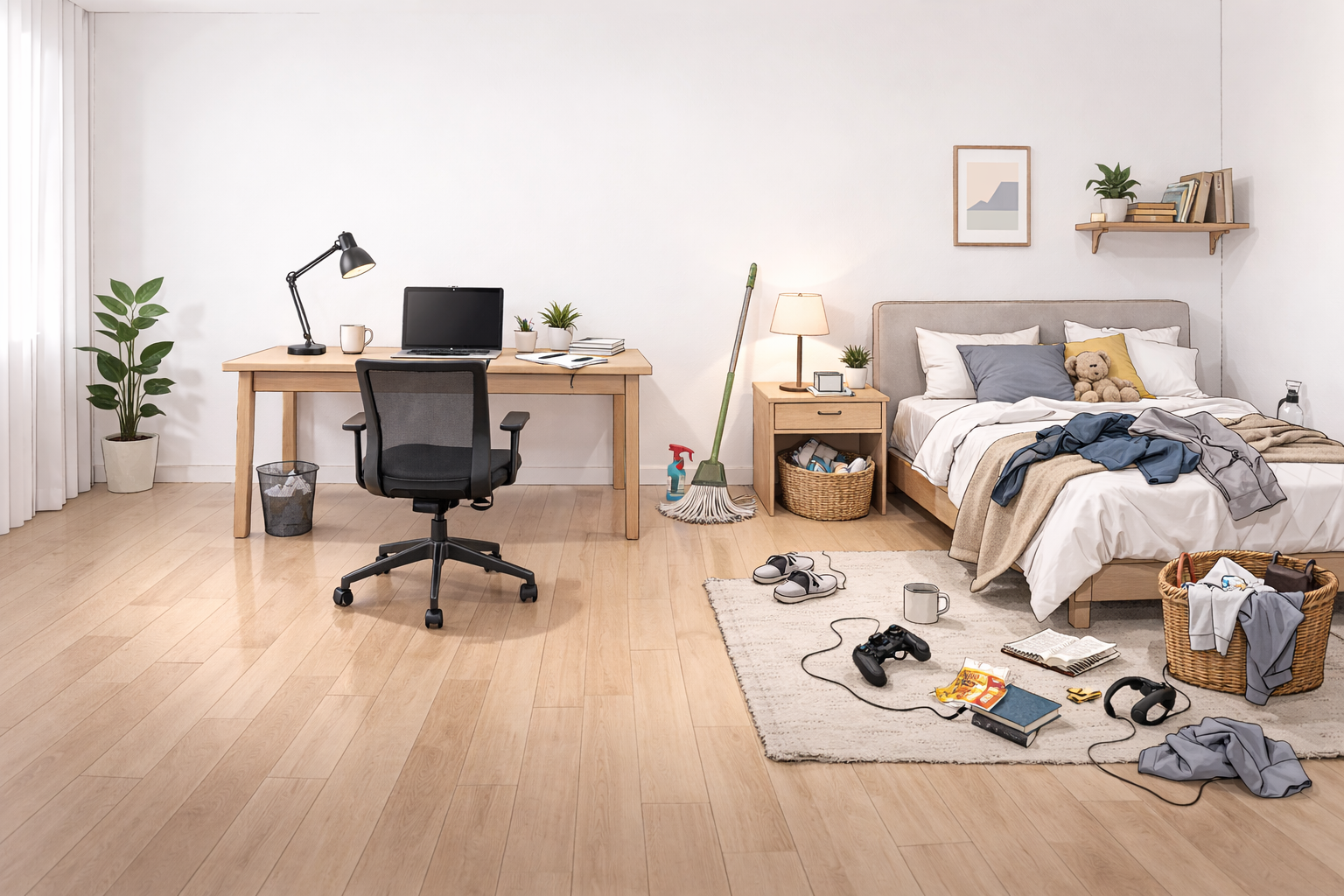
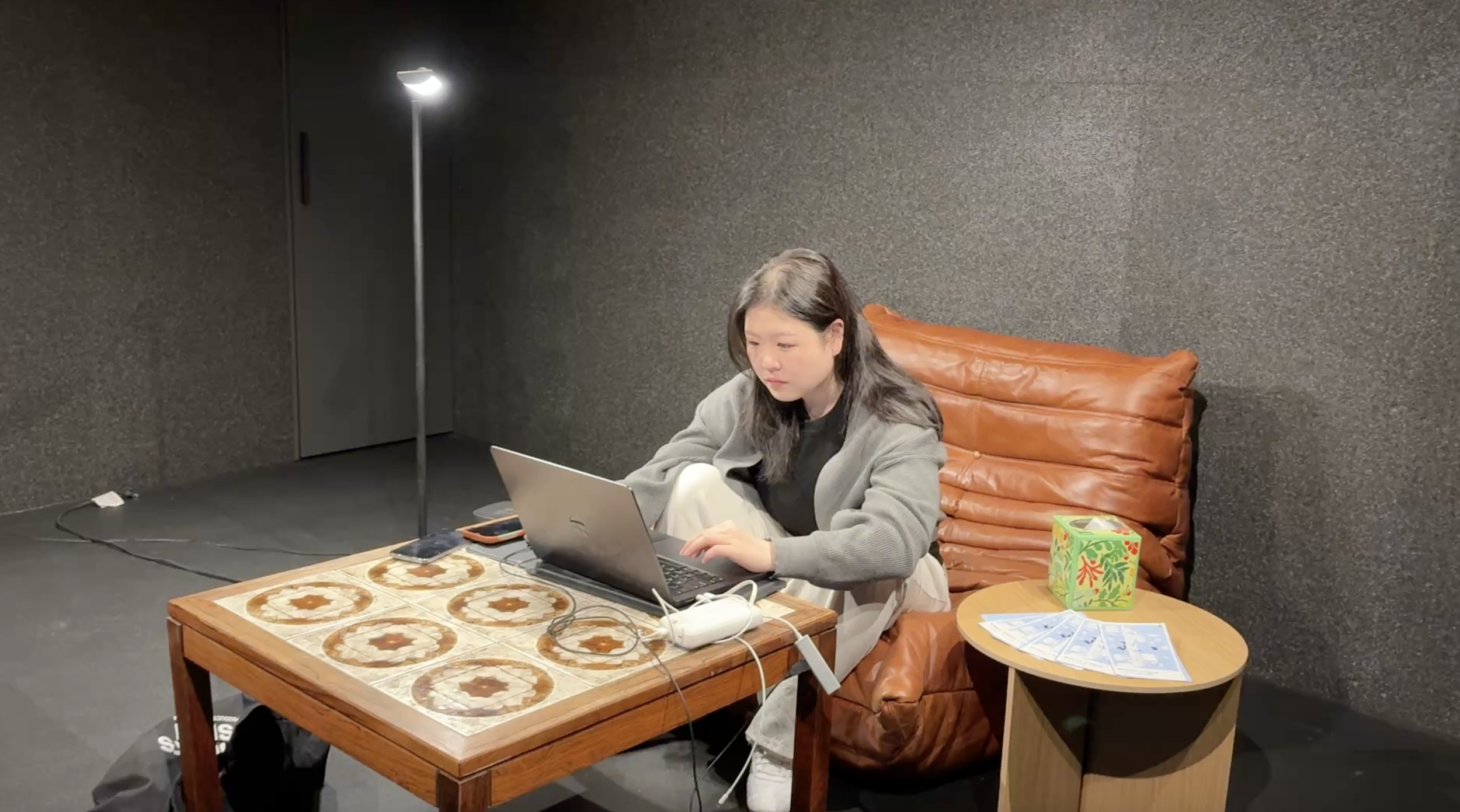
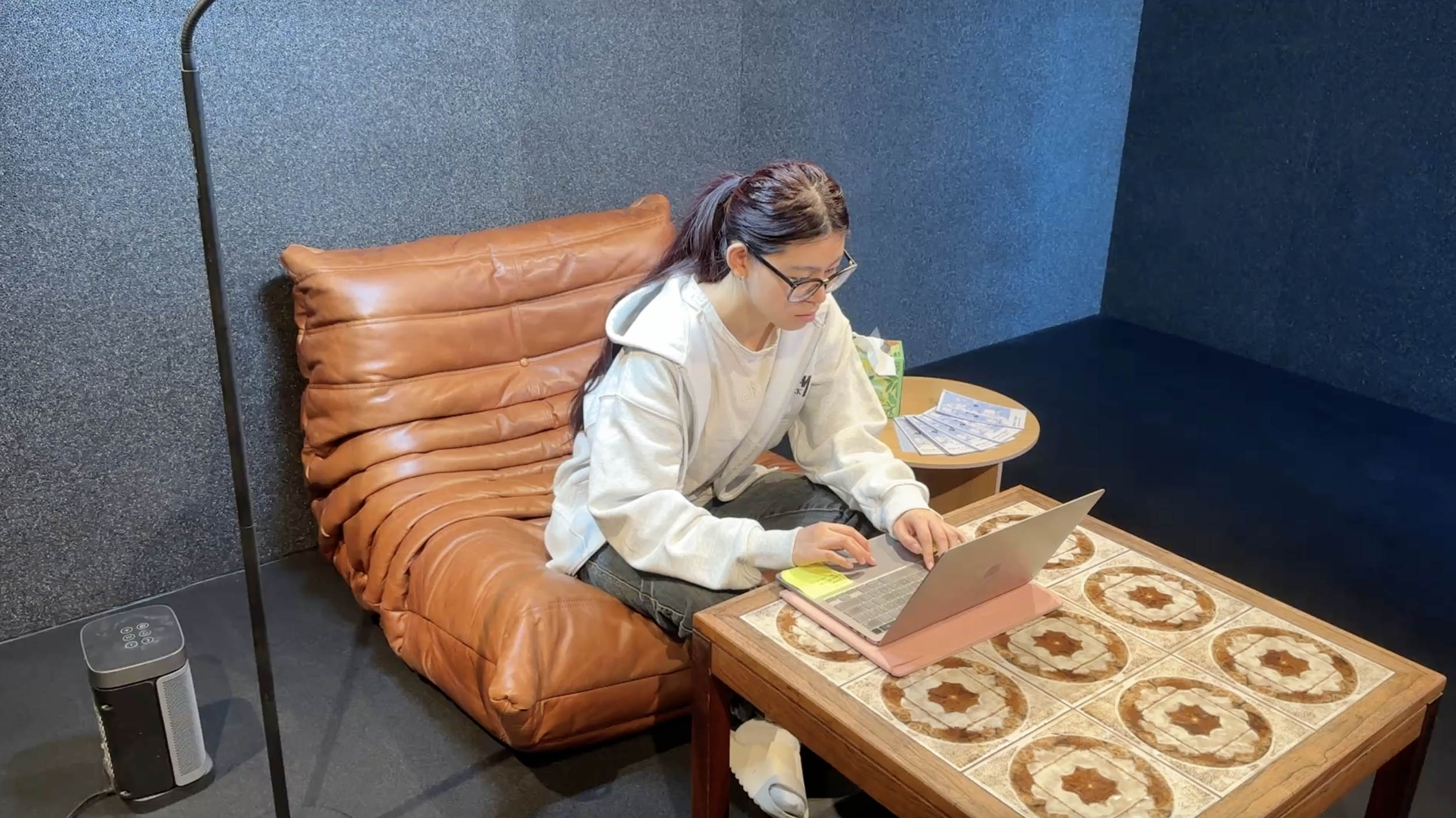
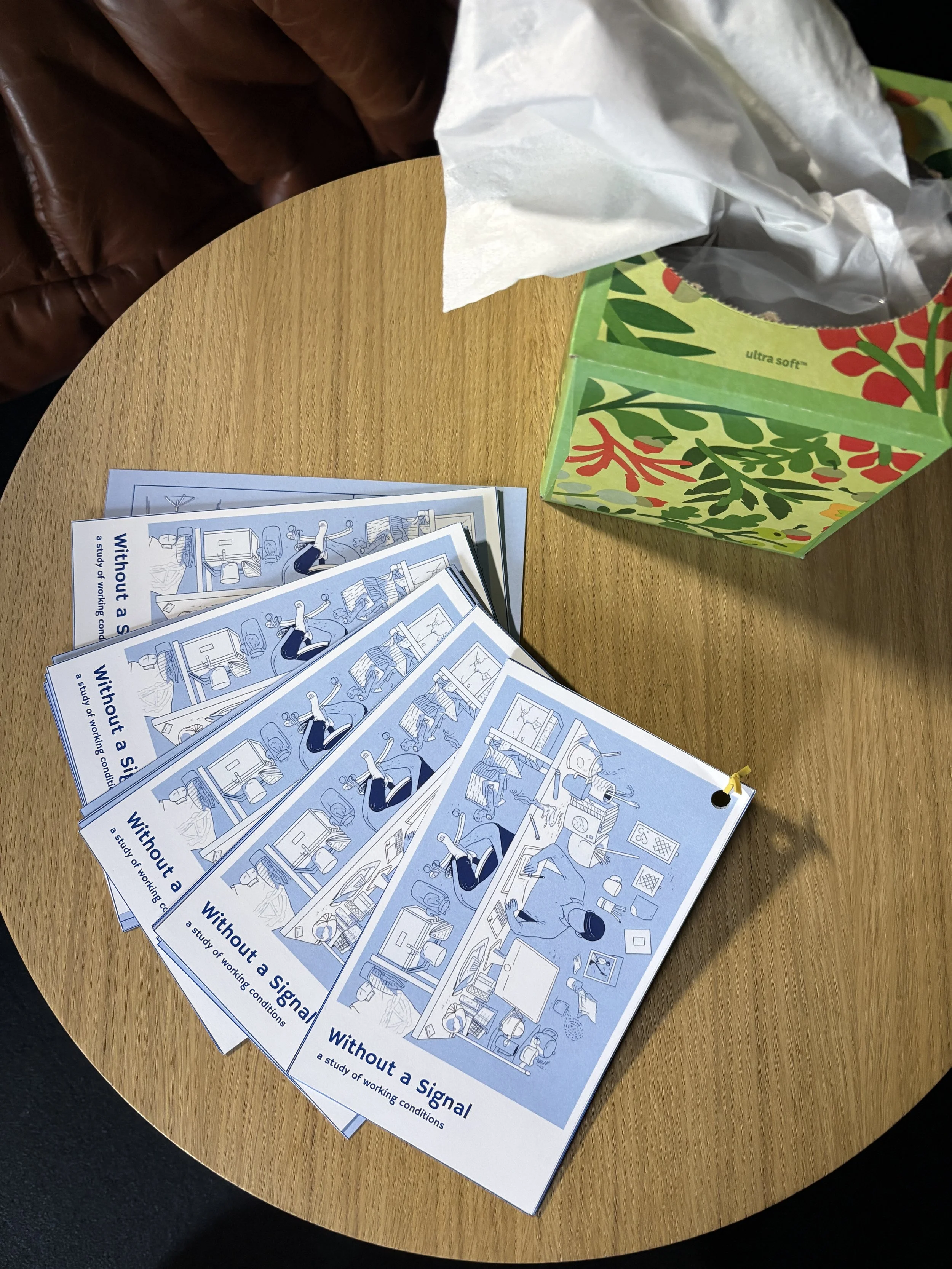
Participants are invited to work on their own real tasks inside a controlled space that gradually shifts from a clean workspace into a domestic environment.
Rather than asking participants how they feel, the project observes what they actually do when discomfort emerges.
Concept
The experience is designed around a simple question:
What happens when the environment no longer supports work — but nothing tells you to stop?
To explore this, the project removes external stopping signals and introduces gradual environmental changes across four dimensions:
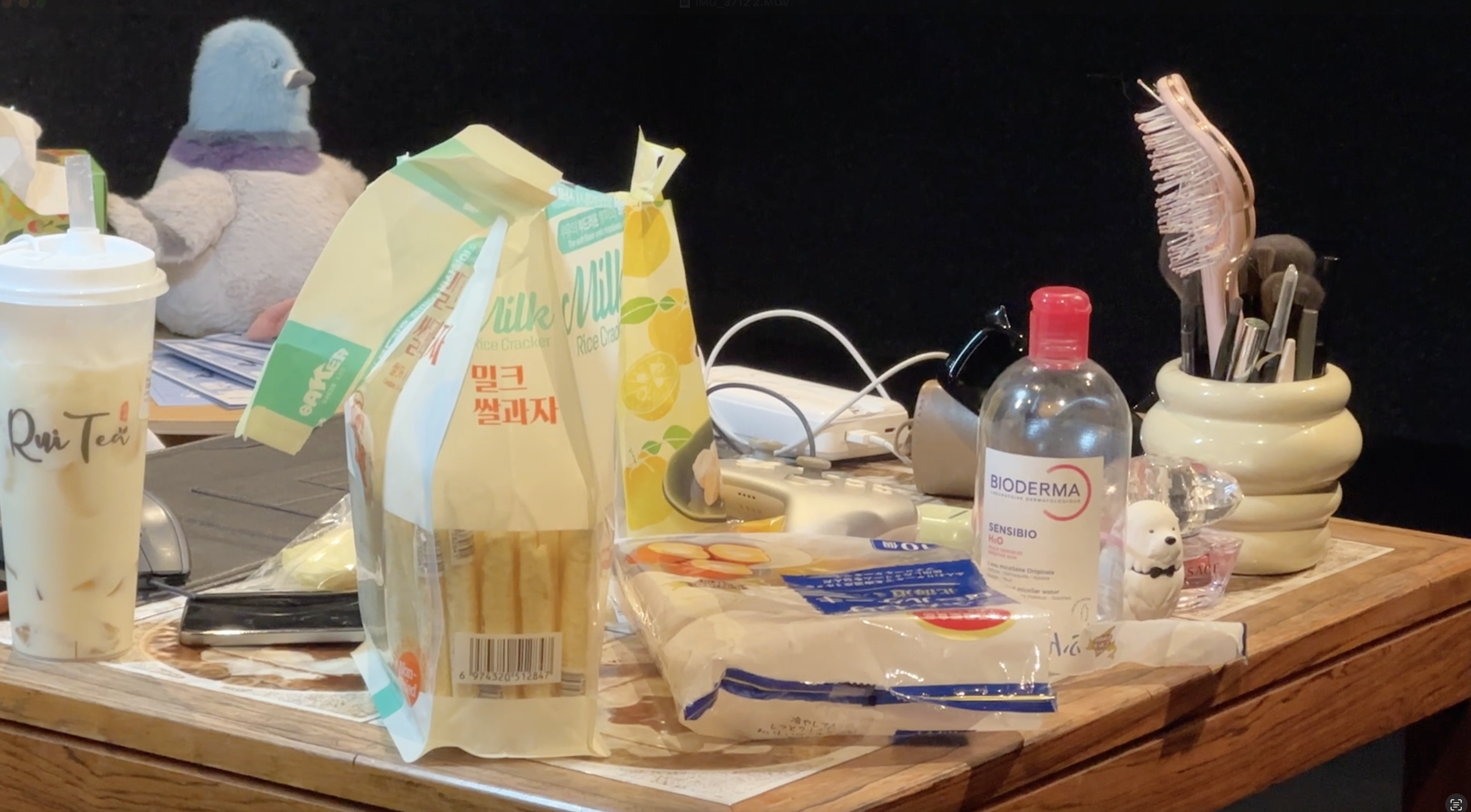
Objects — personal items, snacks, and clutter accumulate
Light — shifts from cool to warm
Temperature — increases over time
Sound — transitions from silence to domestic noise
These changes are subtle but cumulative, simulating the conditions of working from home.
Experience Design
The experience lasts 30 minutes and follows a structured progression:
Enter
Participants are invited into a clean, controlled workspace.Work
They begin working on their own tasks without interruption.Shift
The environment gradually changes, becoming more domestic and less suitable for focused work.End
Participants are told they can stop — no stopping cue is provided beforehand.Reflect
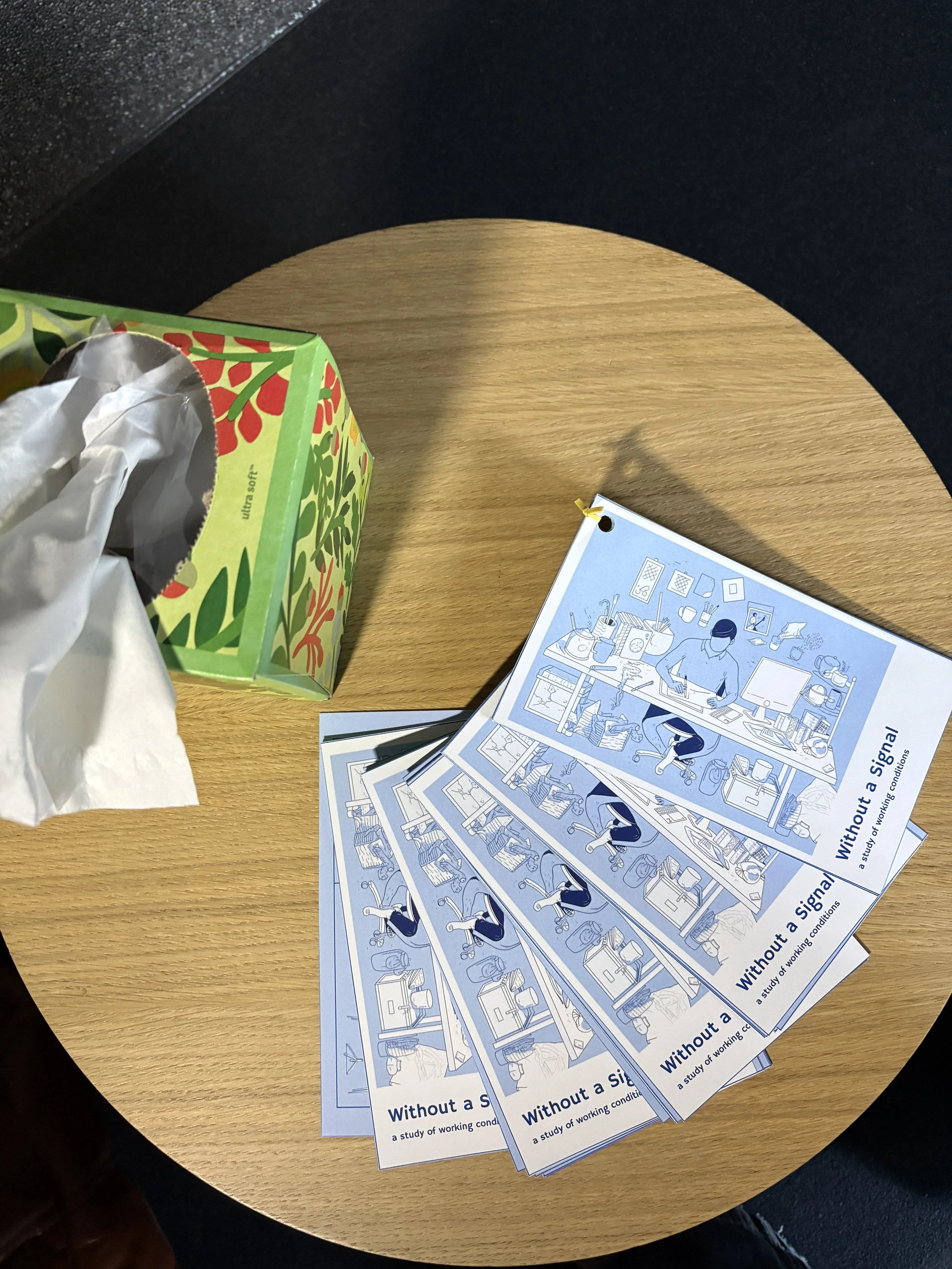
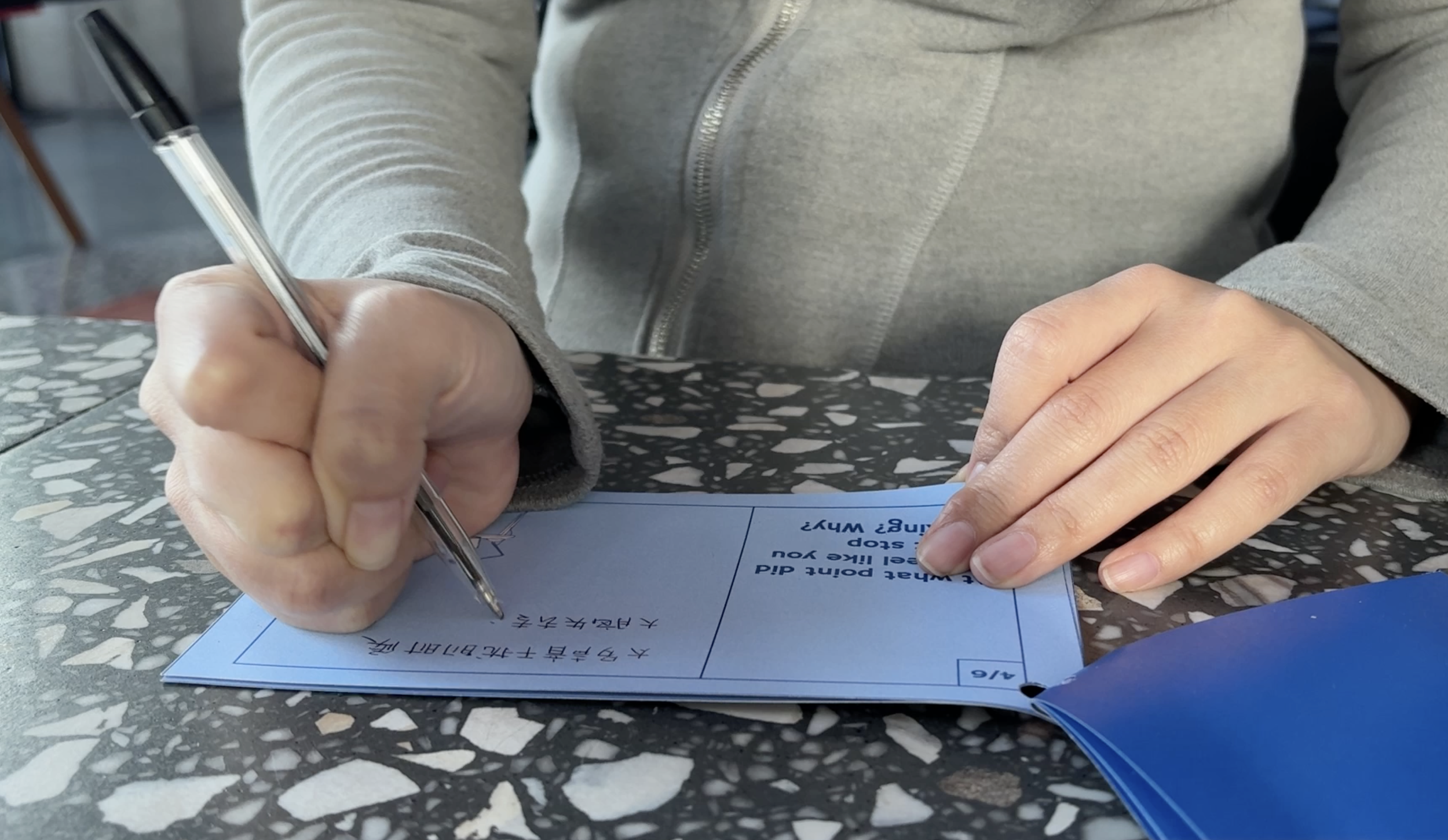
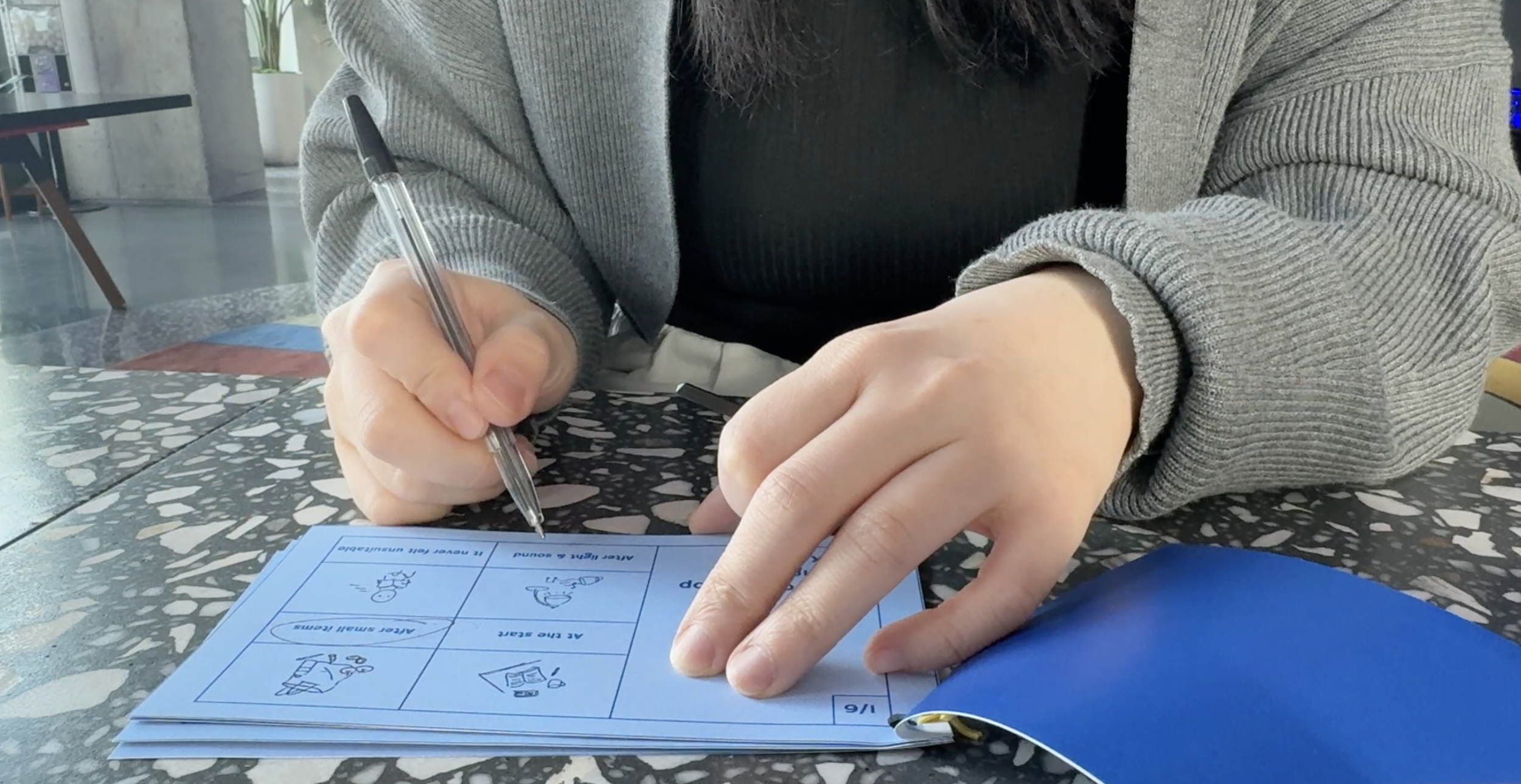
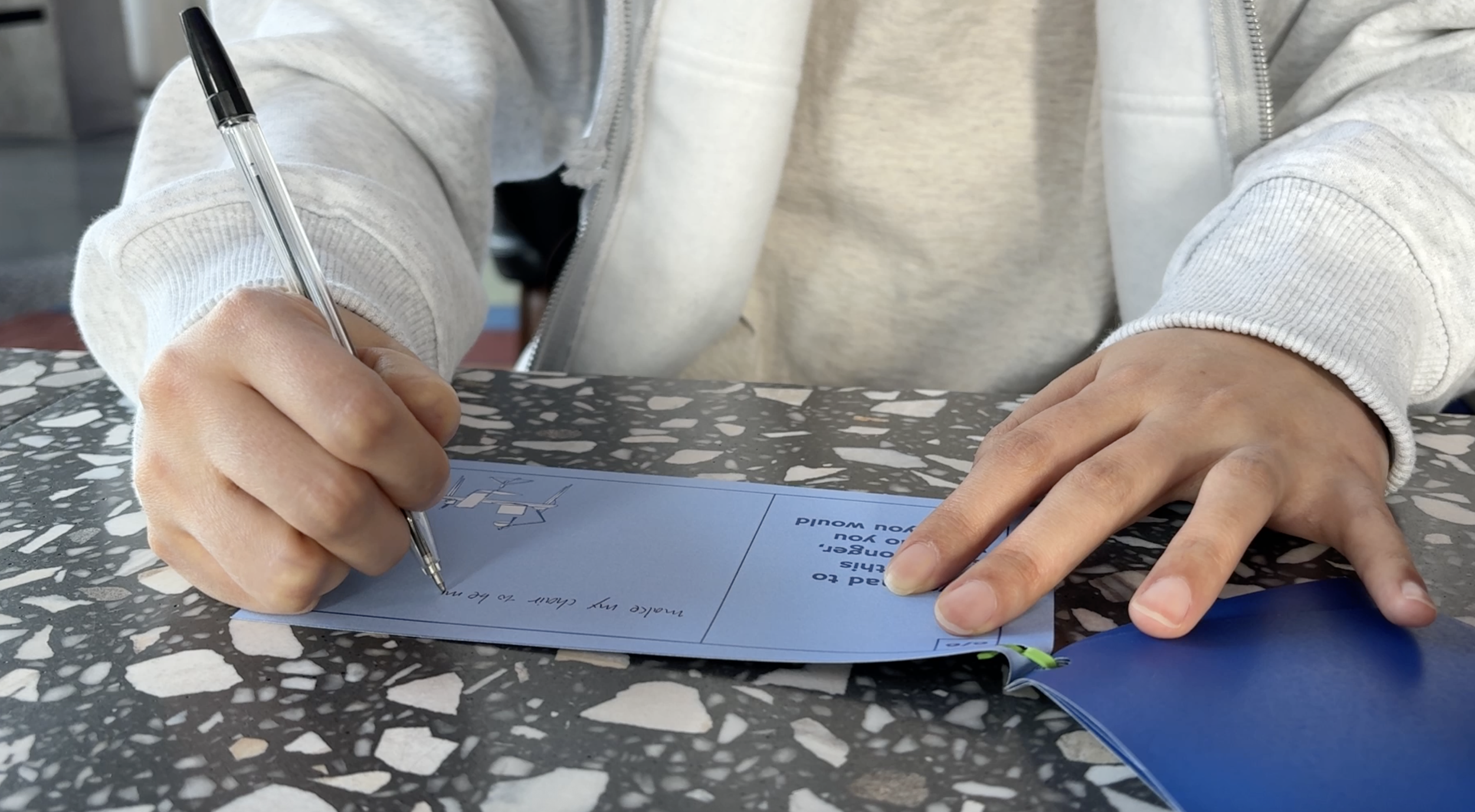
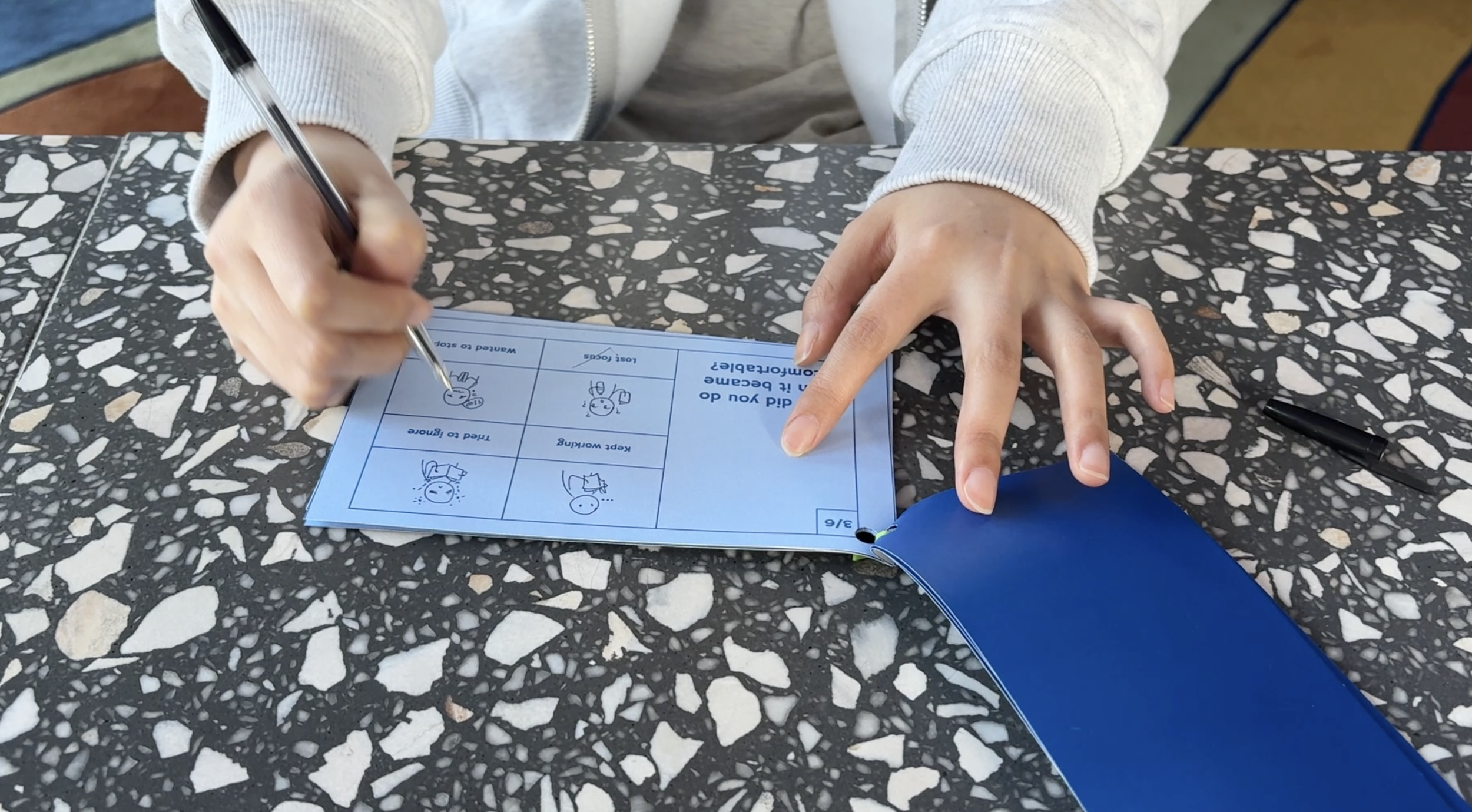
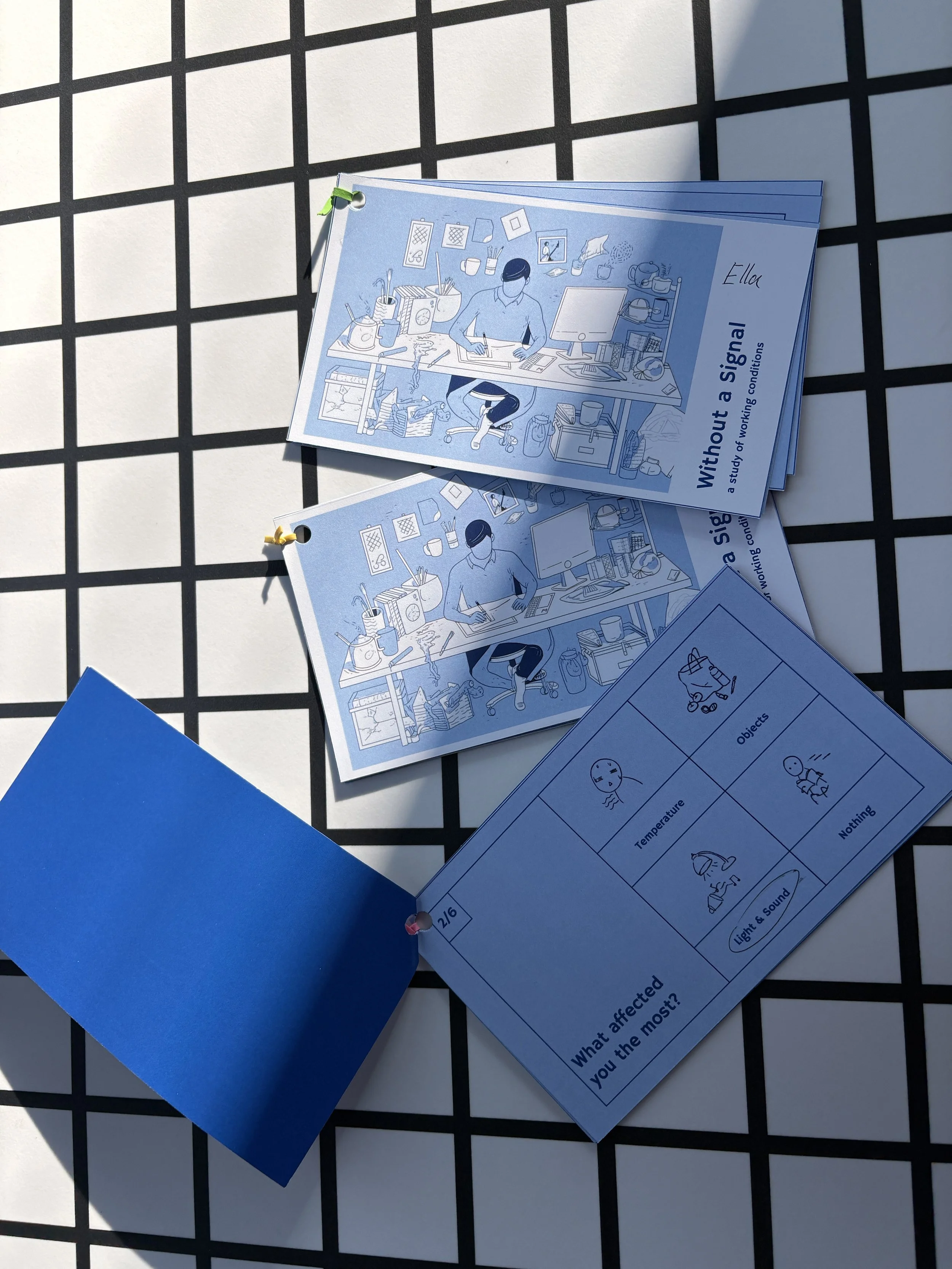
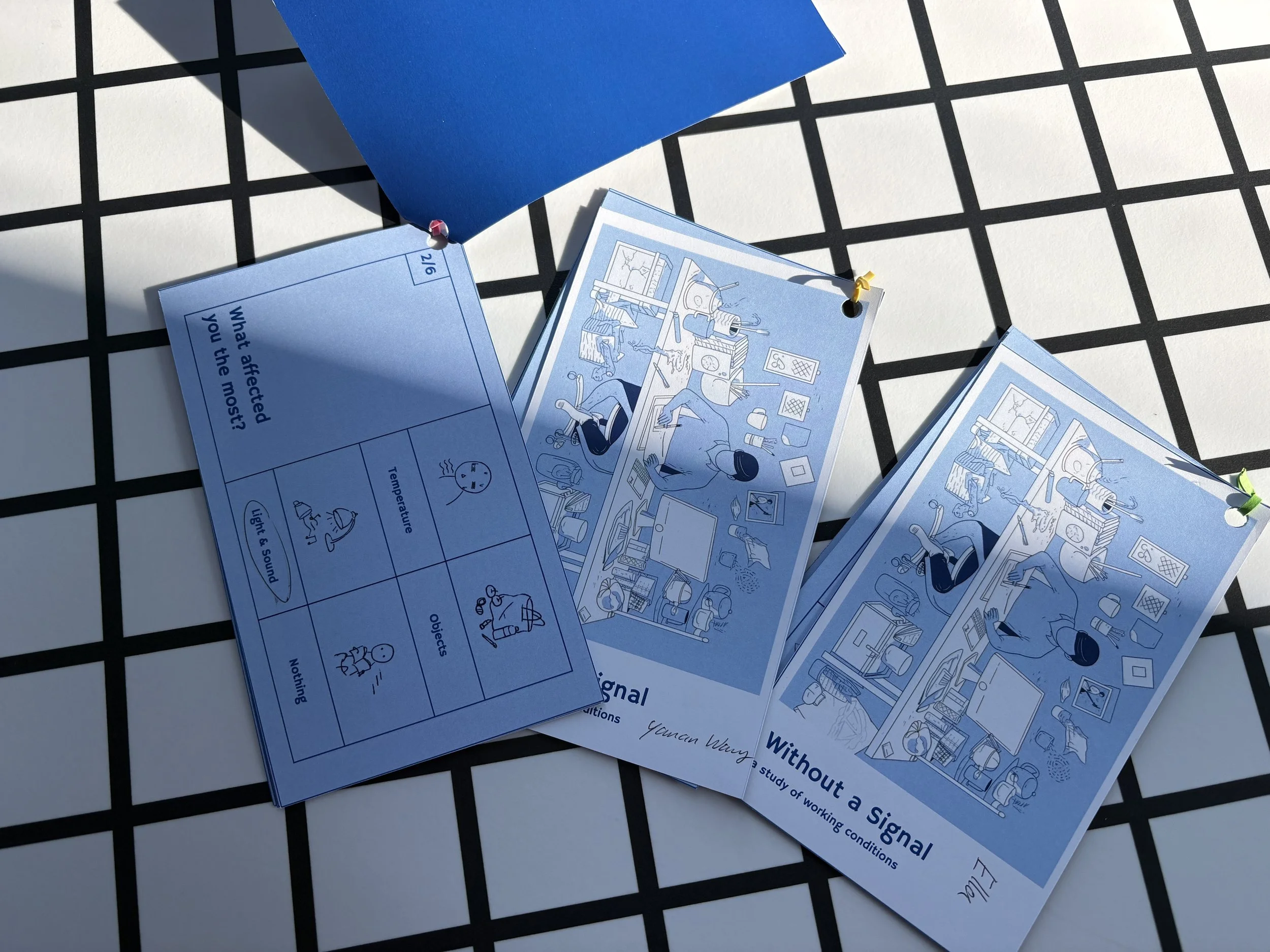
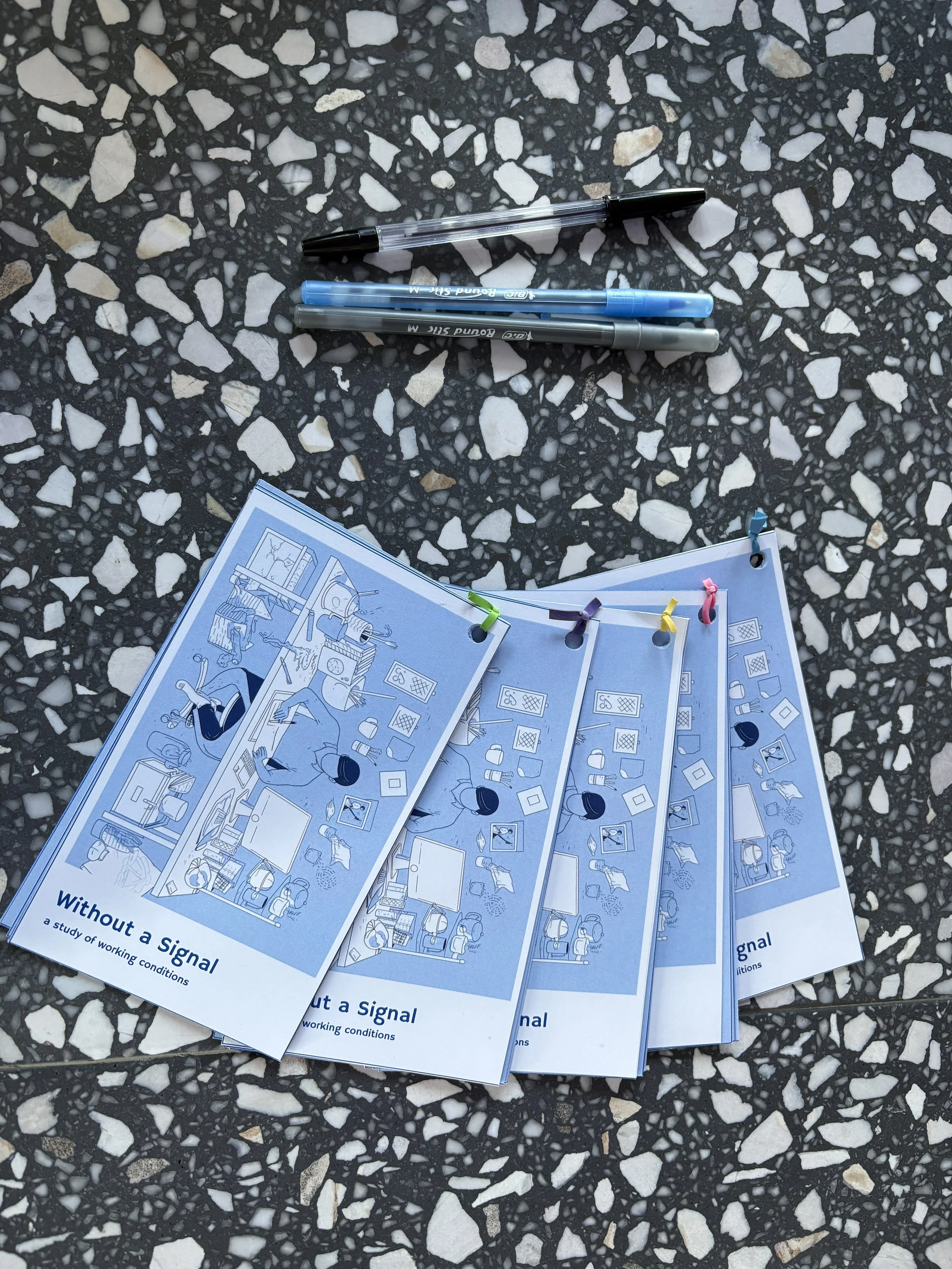
They complete a short questionnaire documenting their perception, discomfort, and decision-making.To create this feeling ➡️

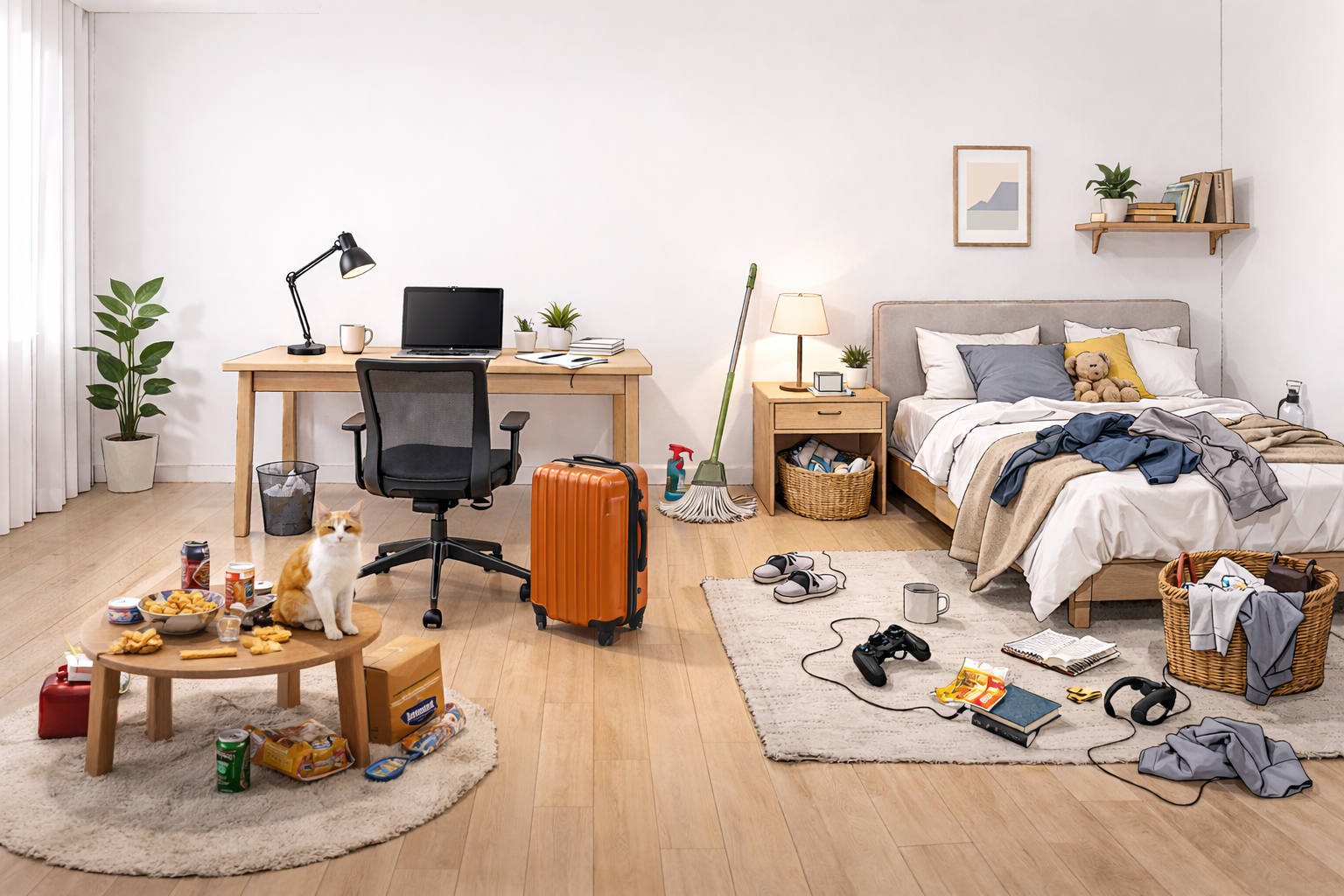
This is a research-through-experience project.
Instead of collecting opinions in advance, the design creates a situation in which participants must respond in real time.
The goal is not to measure productivity, but to reveal:
how people perceive environmental change
how discomfort affects behavior
why people continue working even when conditions deteriorate
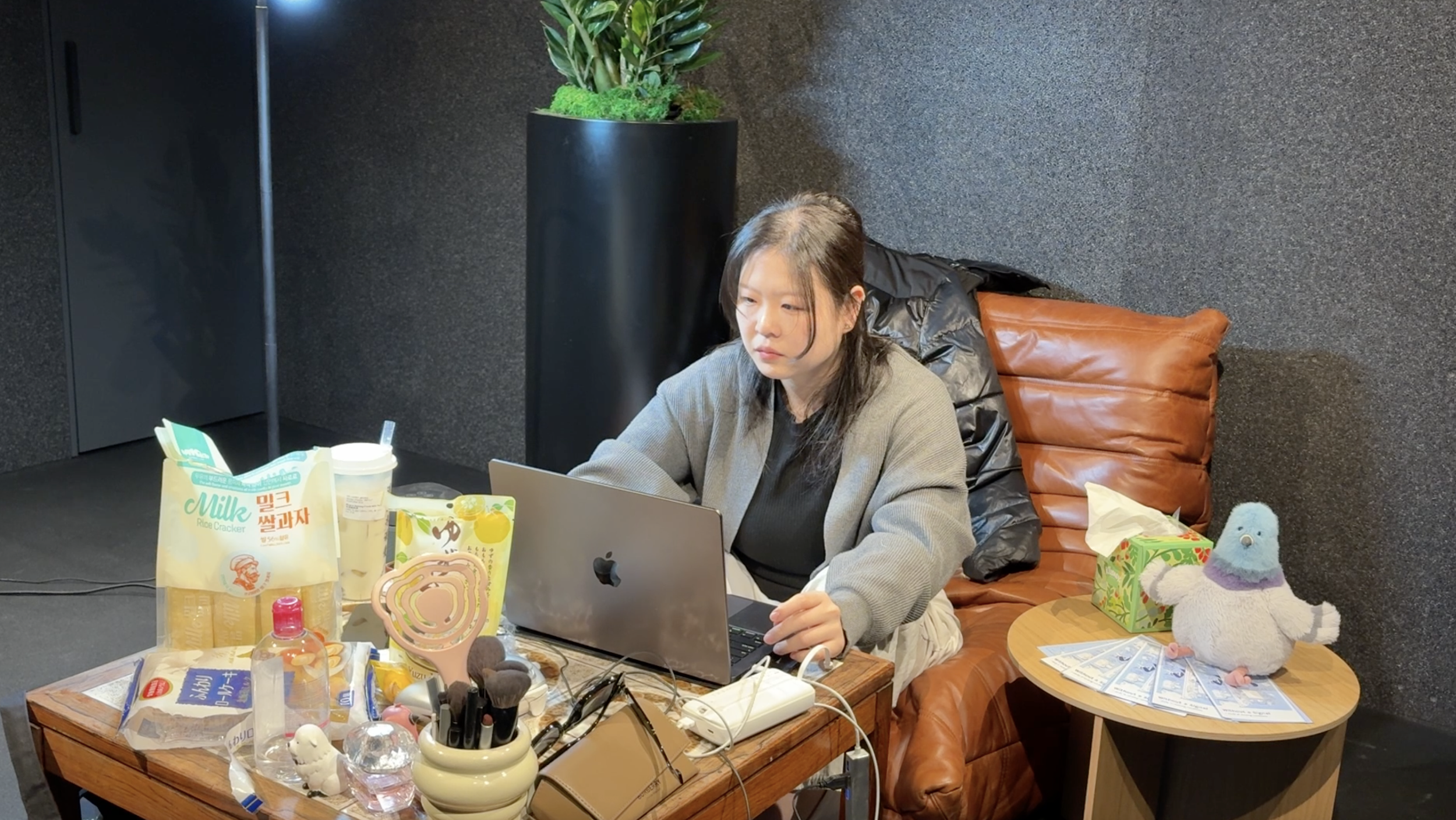
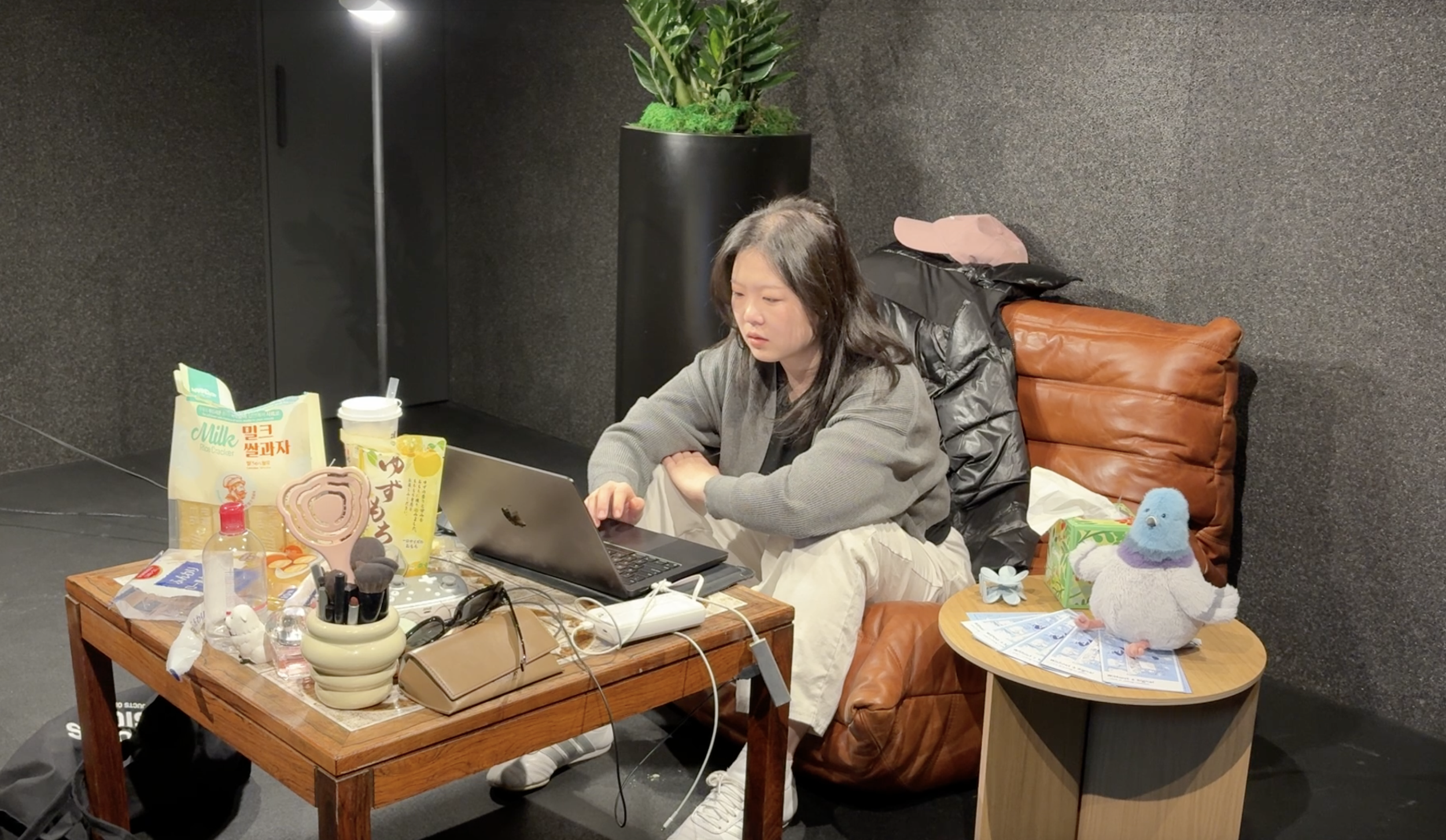
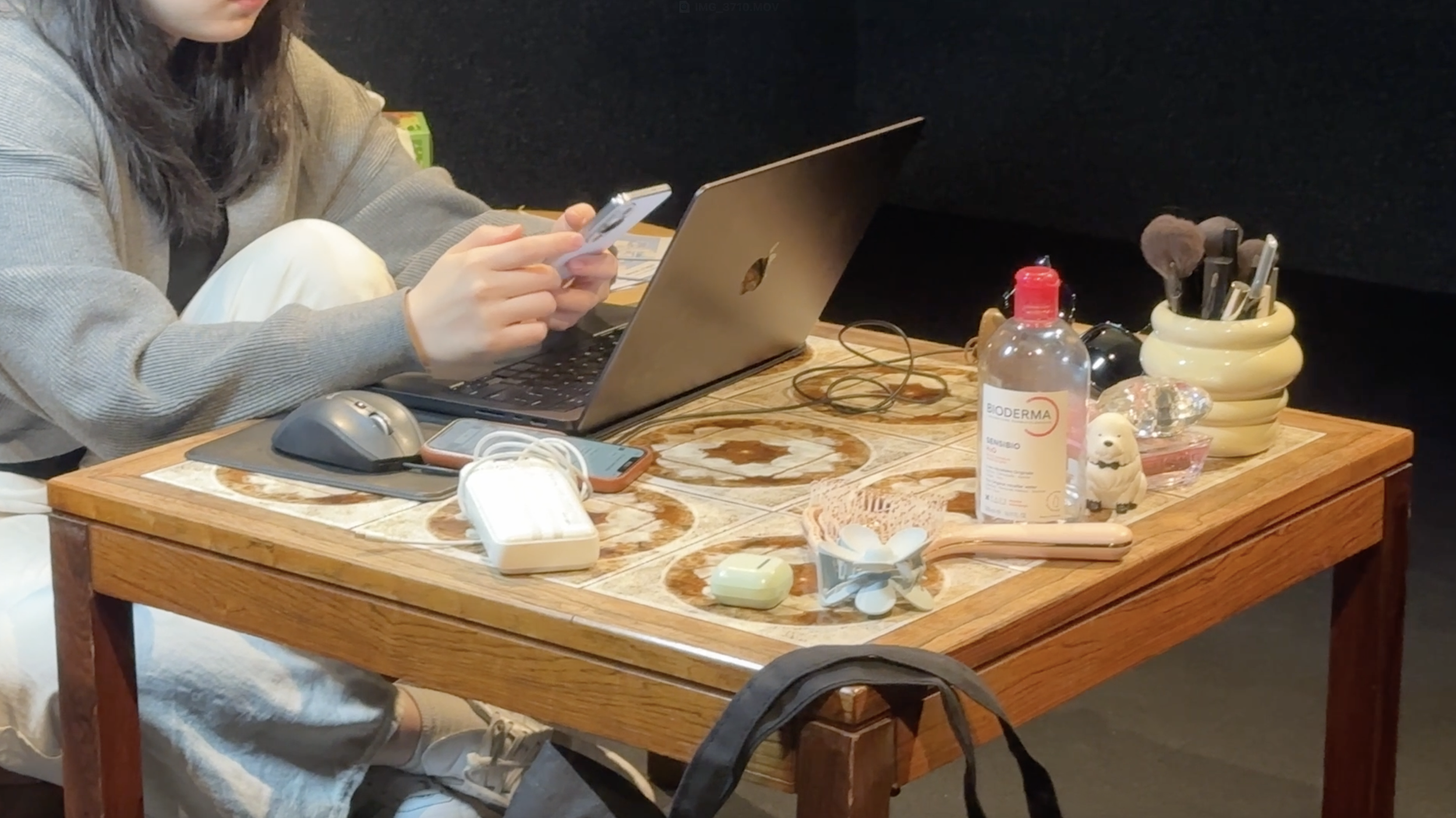
Insights
This project reveals a structural issue in remote work:
Stopping work is not a natural action — it requires permission.
When boundaries are unclear:
discomfort does not interrupt work
environmental signals are perceived but not acted upon
responsibility shifts from system to individual
As a result, work continues — not because the environment supports it,
but because nothing explicitly allows it to end.
Contribution
Rather than proposing a solution, this project reframes the problem:
It shifts the conversation from:
“Why can’t people manage their time?”
to:
“What signals are missing from the system?”
By making invisible conditions visible,
this work contributes to the design of future remote work systems
that support clearer boundaries, rhythms, and transitions.