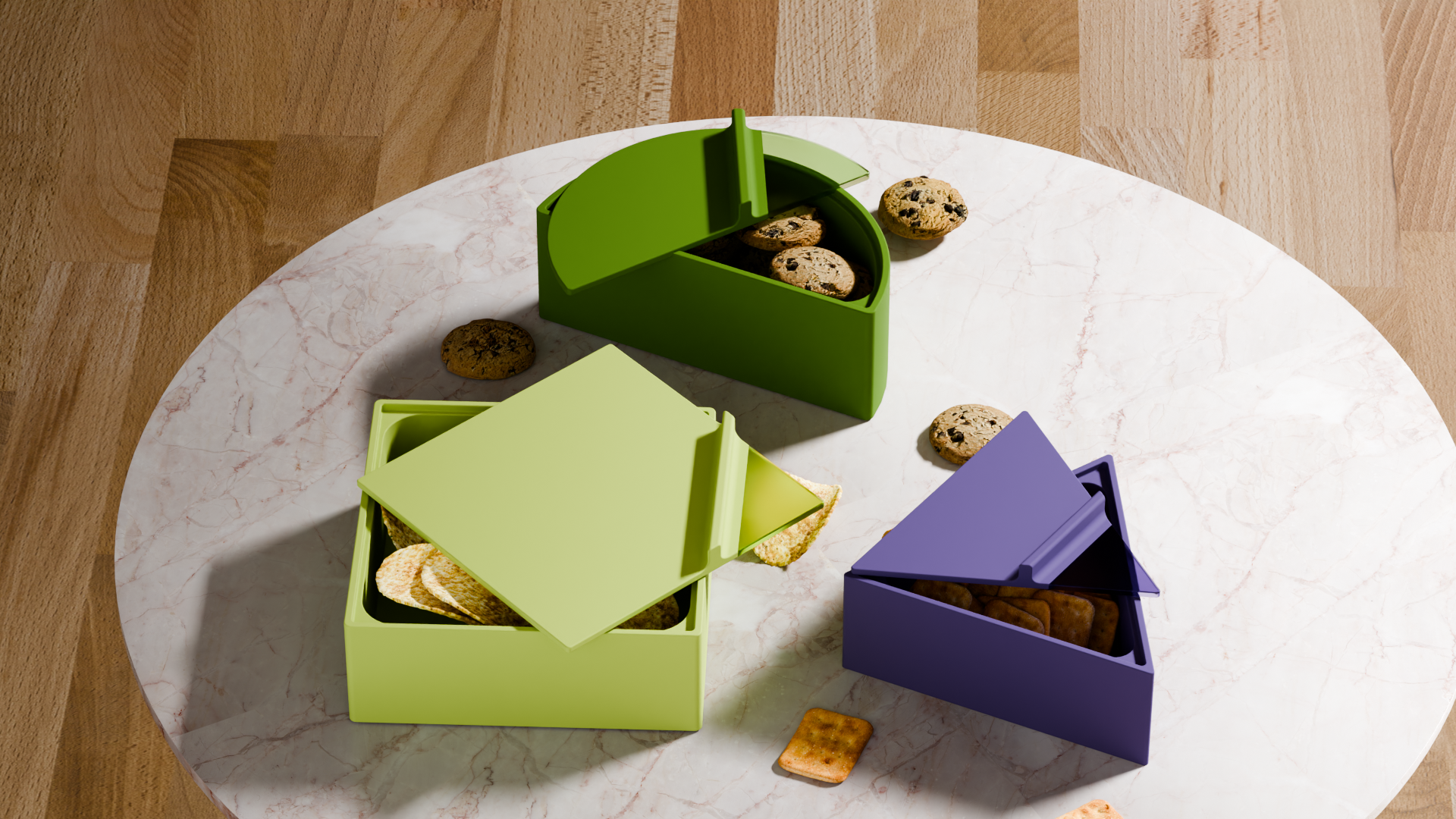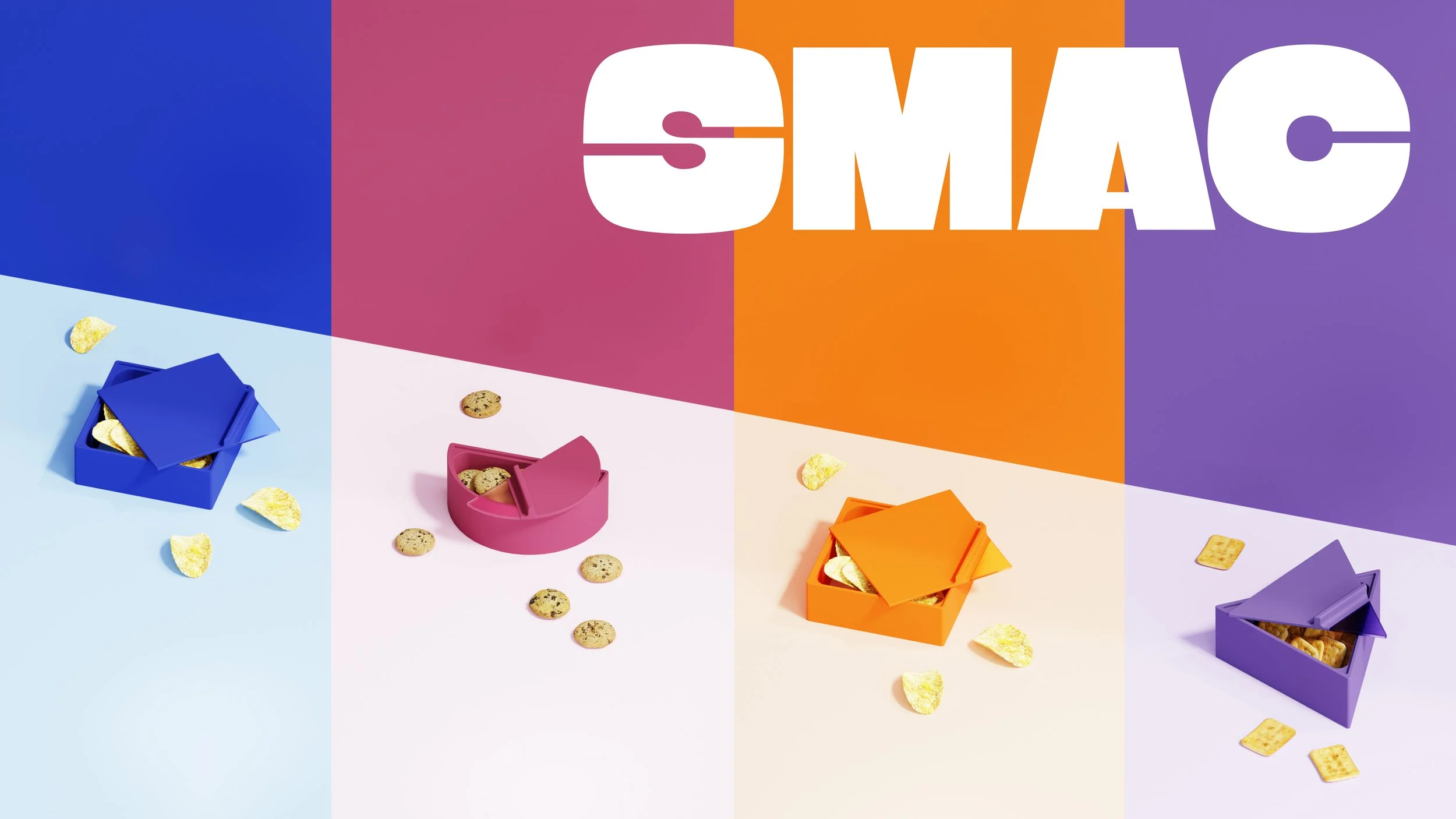
OverviewSMAC is a modular snack storage system designed to make everyday organization feel playful, personal, and visually engaging.
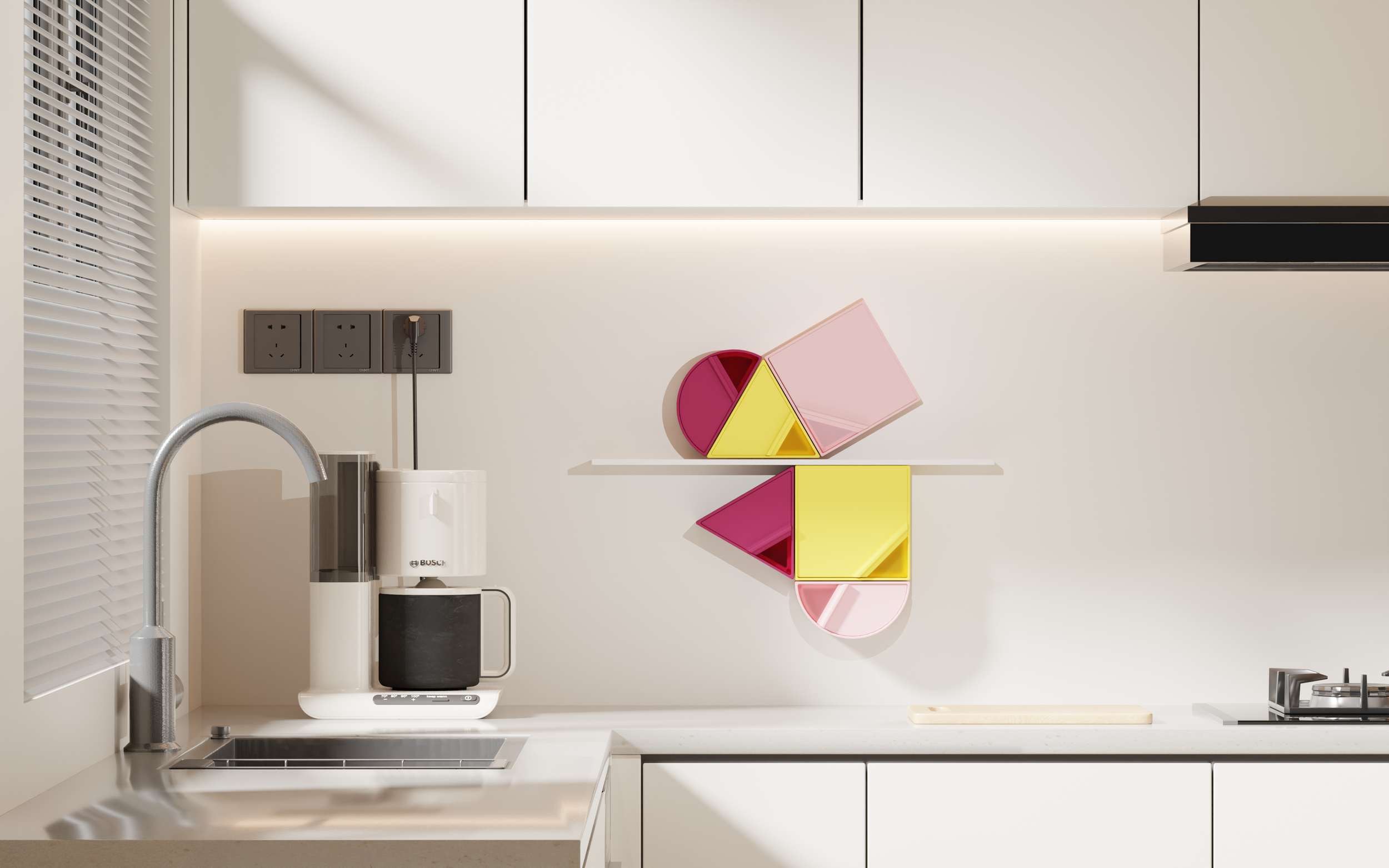
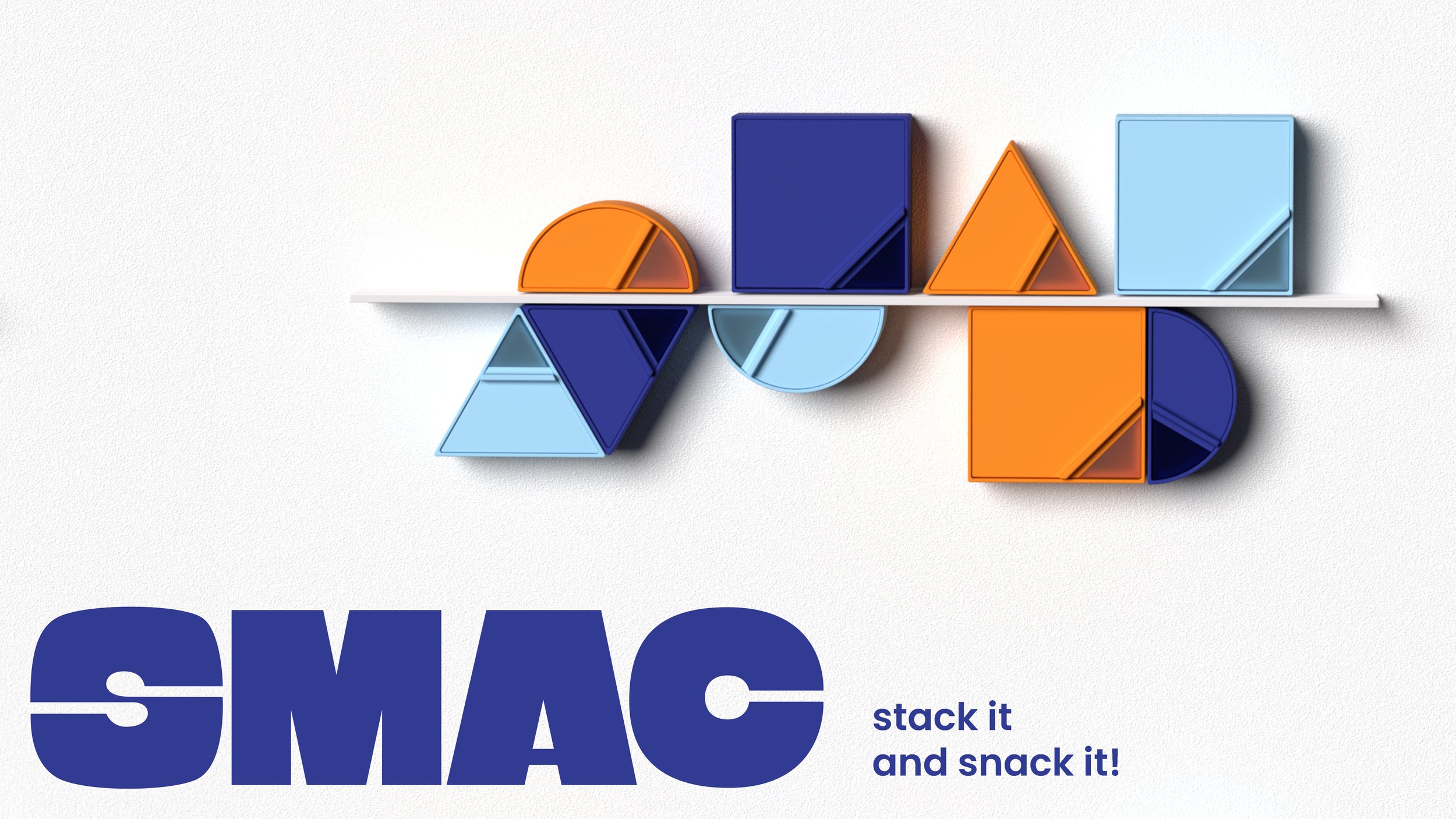
Instead of hiding snacks away in boring containers, SMAC turns food storage into part of the home itself. Through magnetic, stackable forms, users can mix and rearrange snack boxes in endless combinations — creating a storage system that feels more like decor than organization.
The project explores how small everyday interactions can feel more joyful through color, modularity, and tactile design.
SMAC started with a simple question:
Why does food storage always feel so boring?
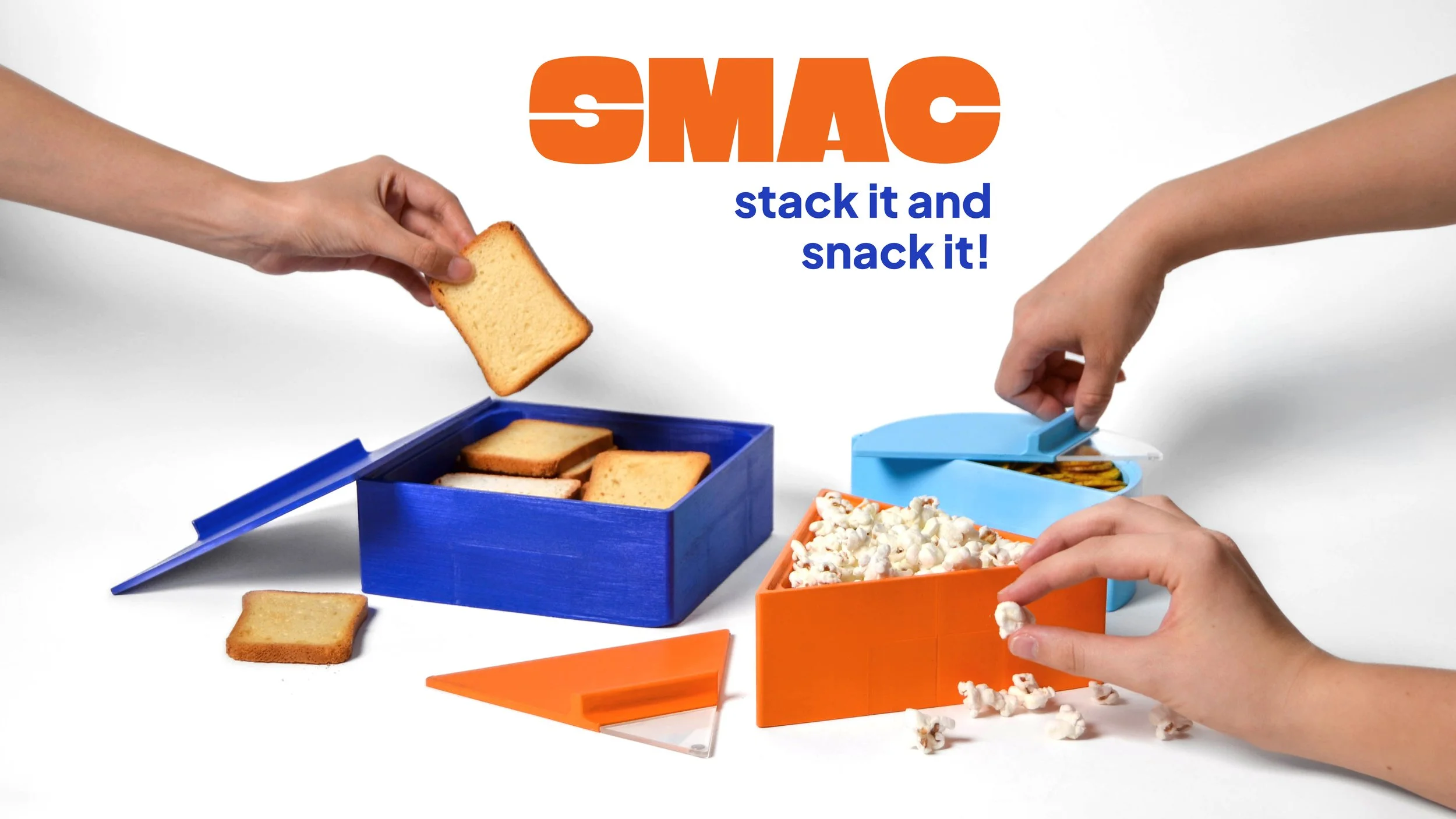
We noticed that most snack containers are designed only for function — plain plastic boxes hidden in cabinets. We wanted to create something that people would actually want to leave out in their living space. Our goal was to design a system where:
snacks have a “home” of their own
storage feels playful instead of purely practical
modularity encourages interaction and customization
organization becomes part of home decoration

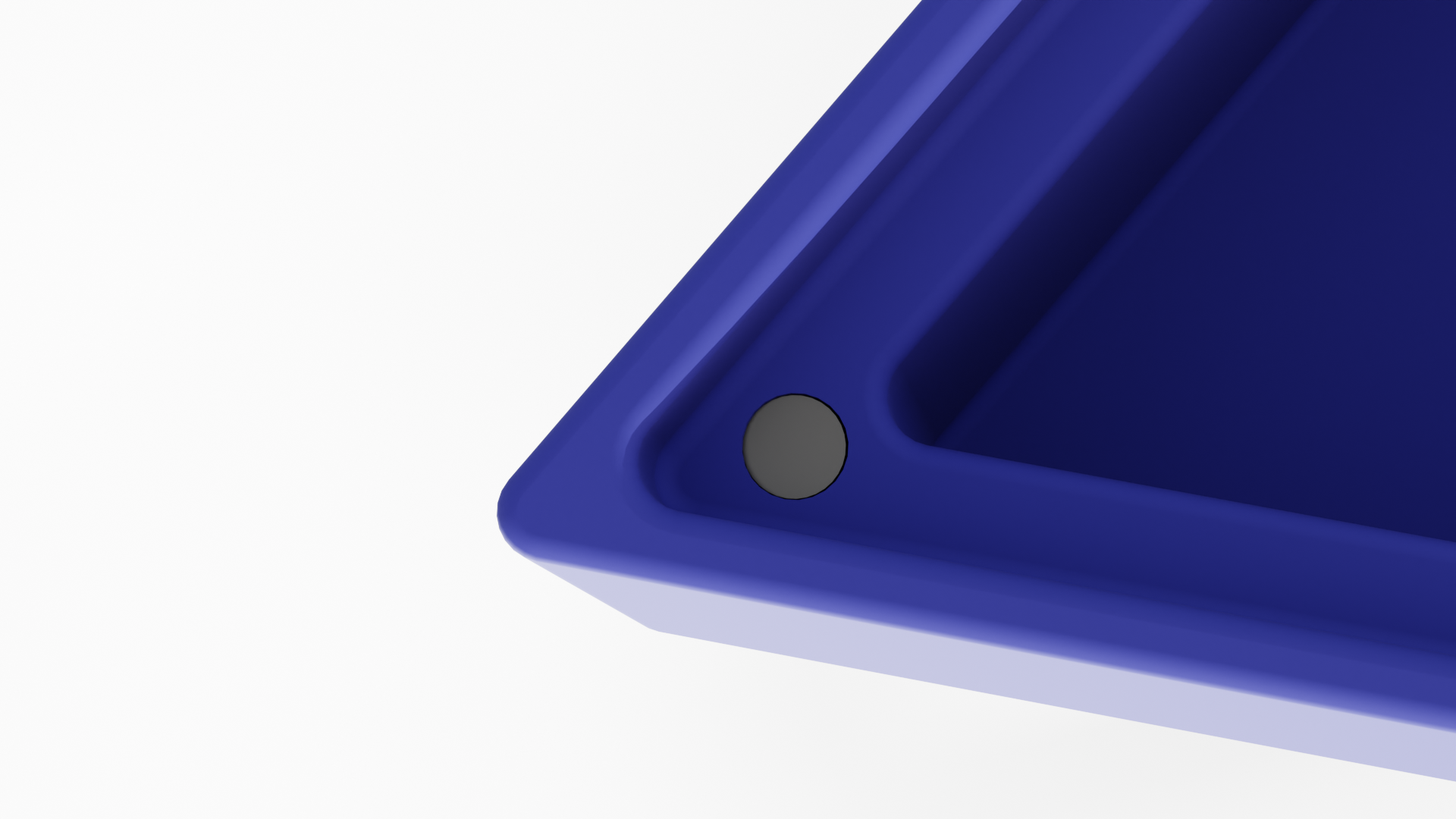
SMAC combines
Modular geometry
magnetic interaction
Playful color systems
Home decor aesthetics
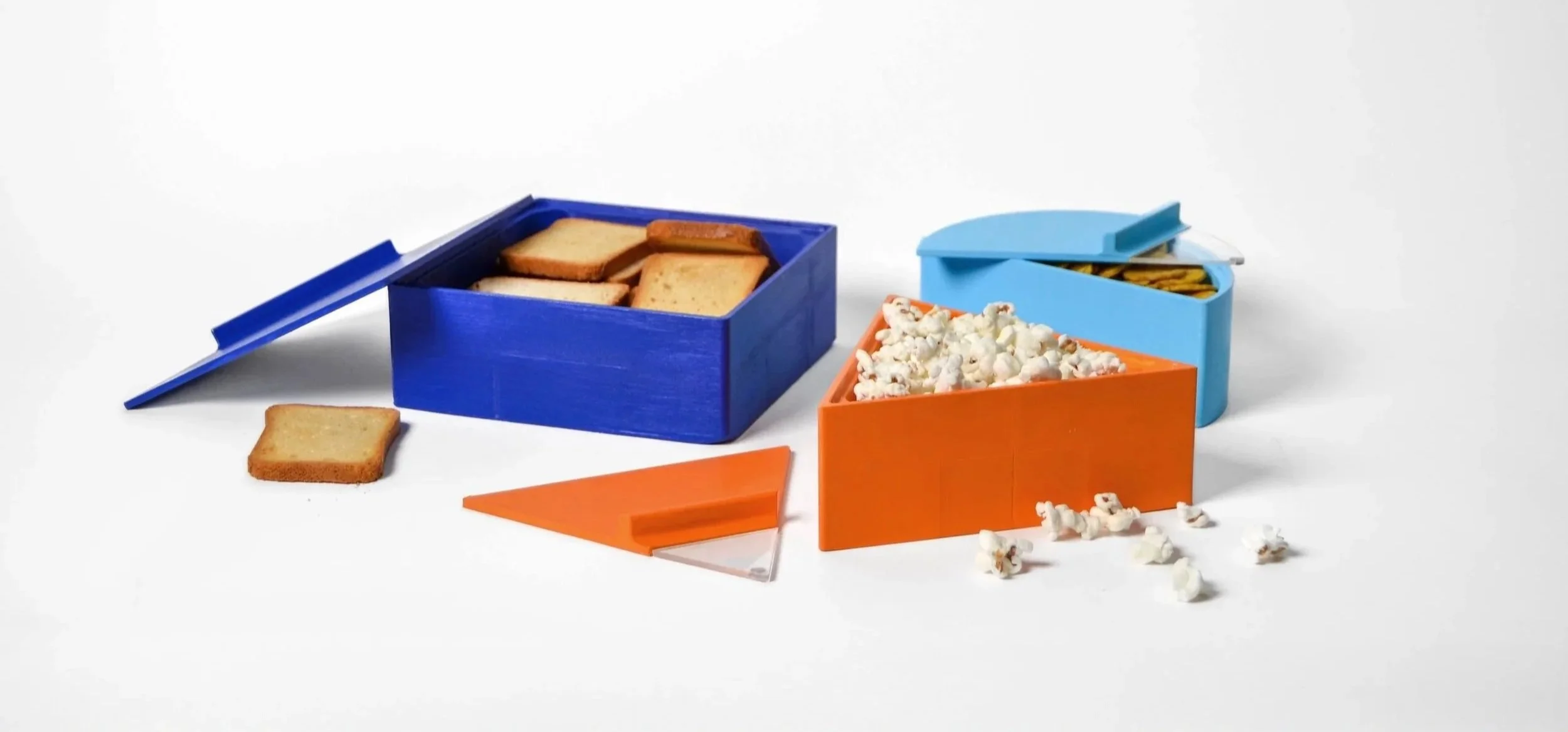
Each box connects magnetically, allowing users to stack, rotate, and rearrange pieces freely.
The shapes — squares, triangles, and semicircles — were designed with shared edge dimensions so they can combine seamlessly into larger compositions.
The result is a snack storage system that feels interactive, satisfying, and expressive.

Magnetic Modular System
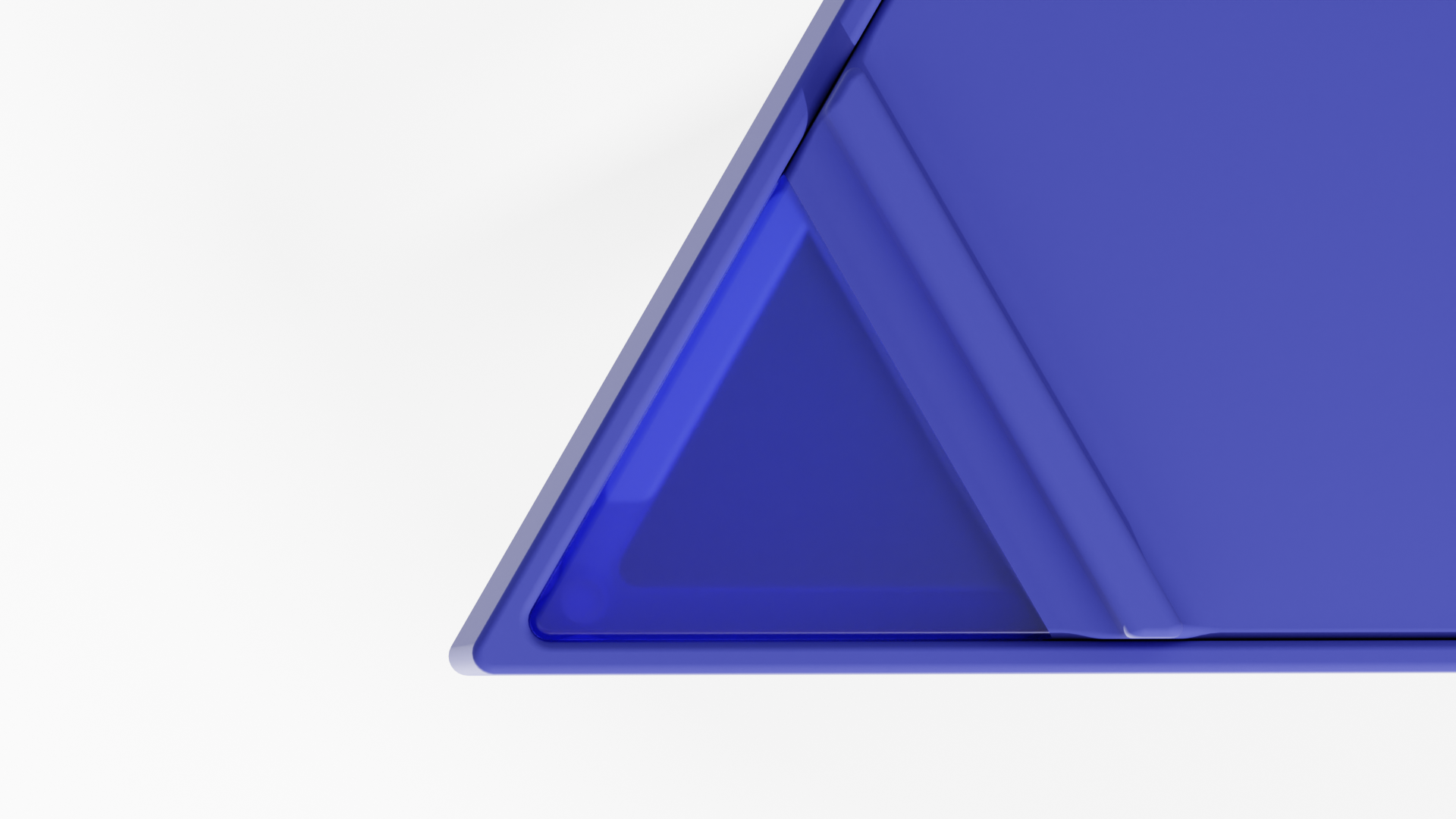
Each snack box contains hidden magnets that allow the containers to connect together effortlessly.
The magnetic interaction creates a tactile “click” that makes organizing feel intuitive and enjoyable.

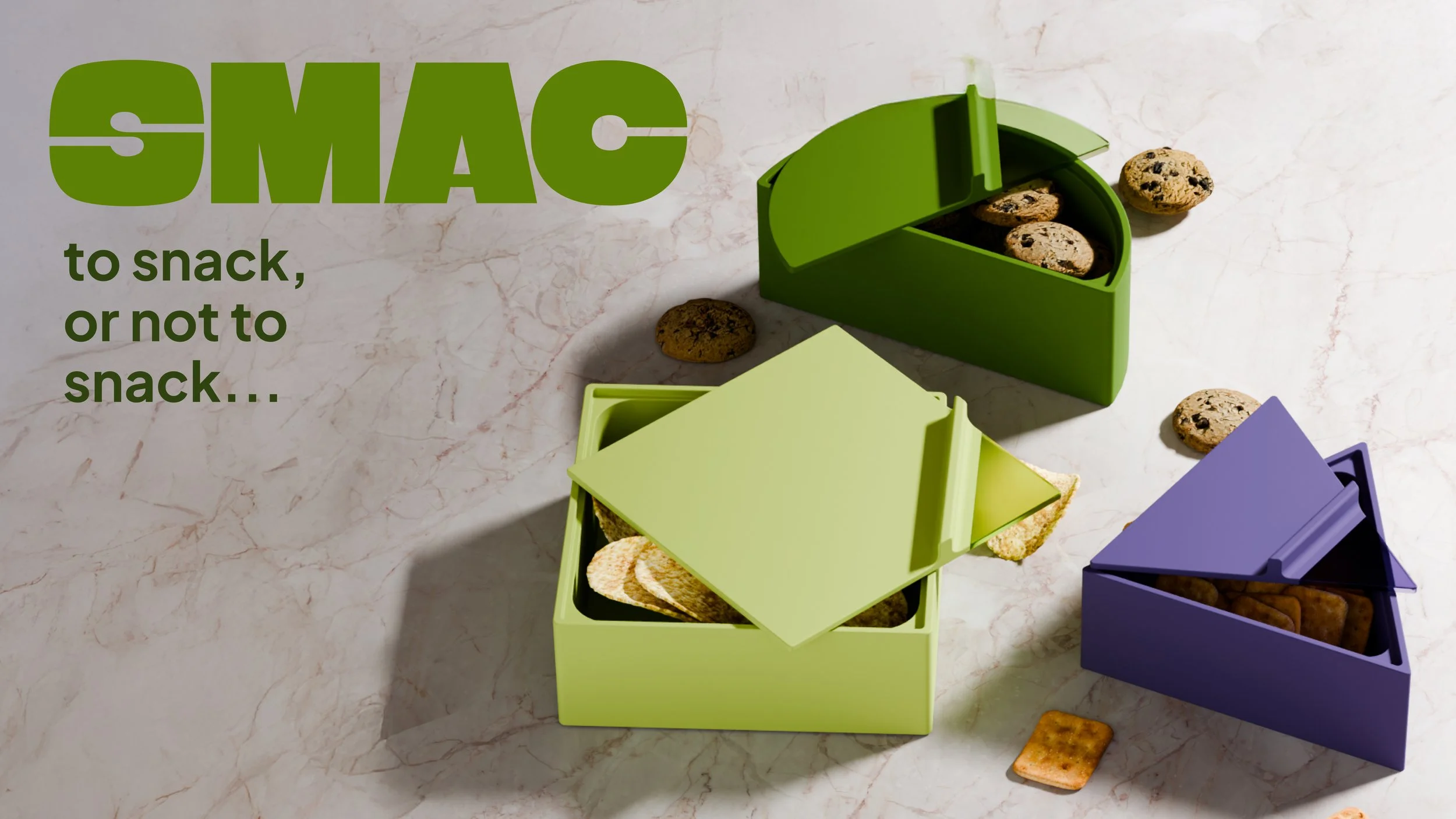
Logo design


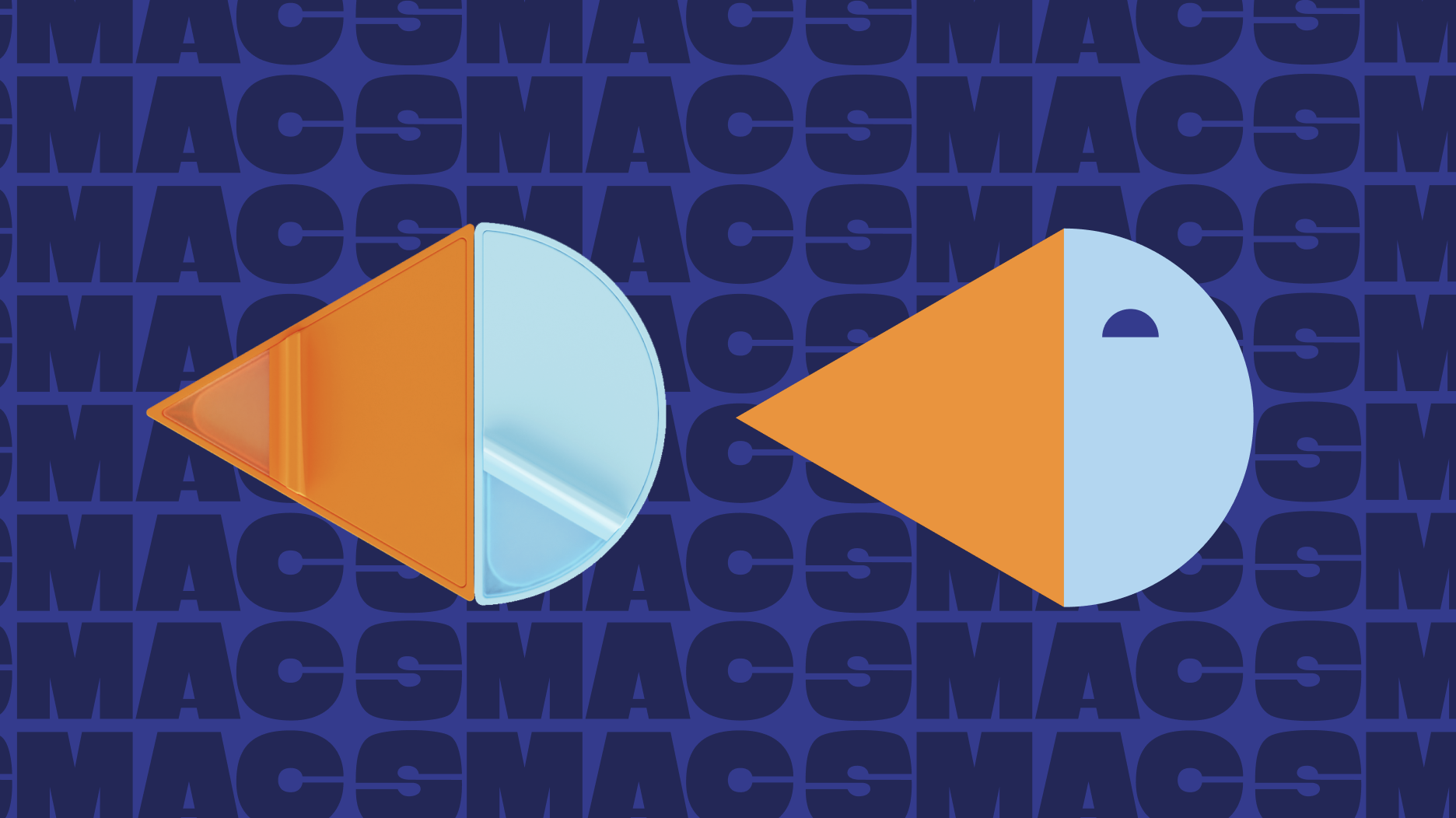


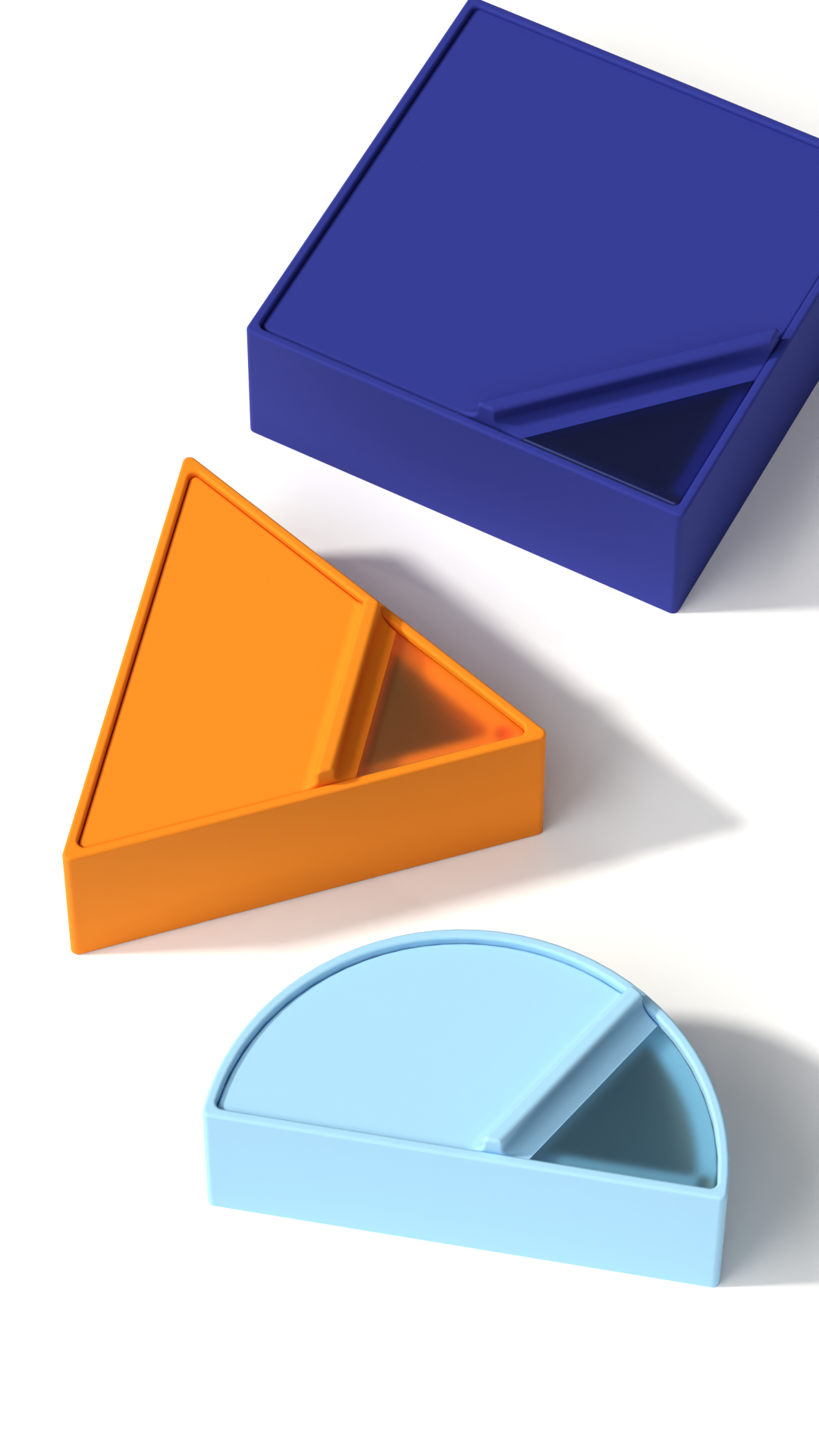
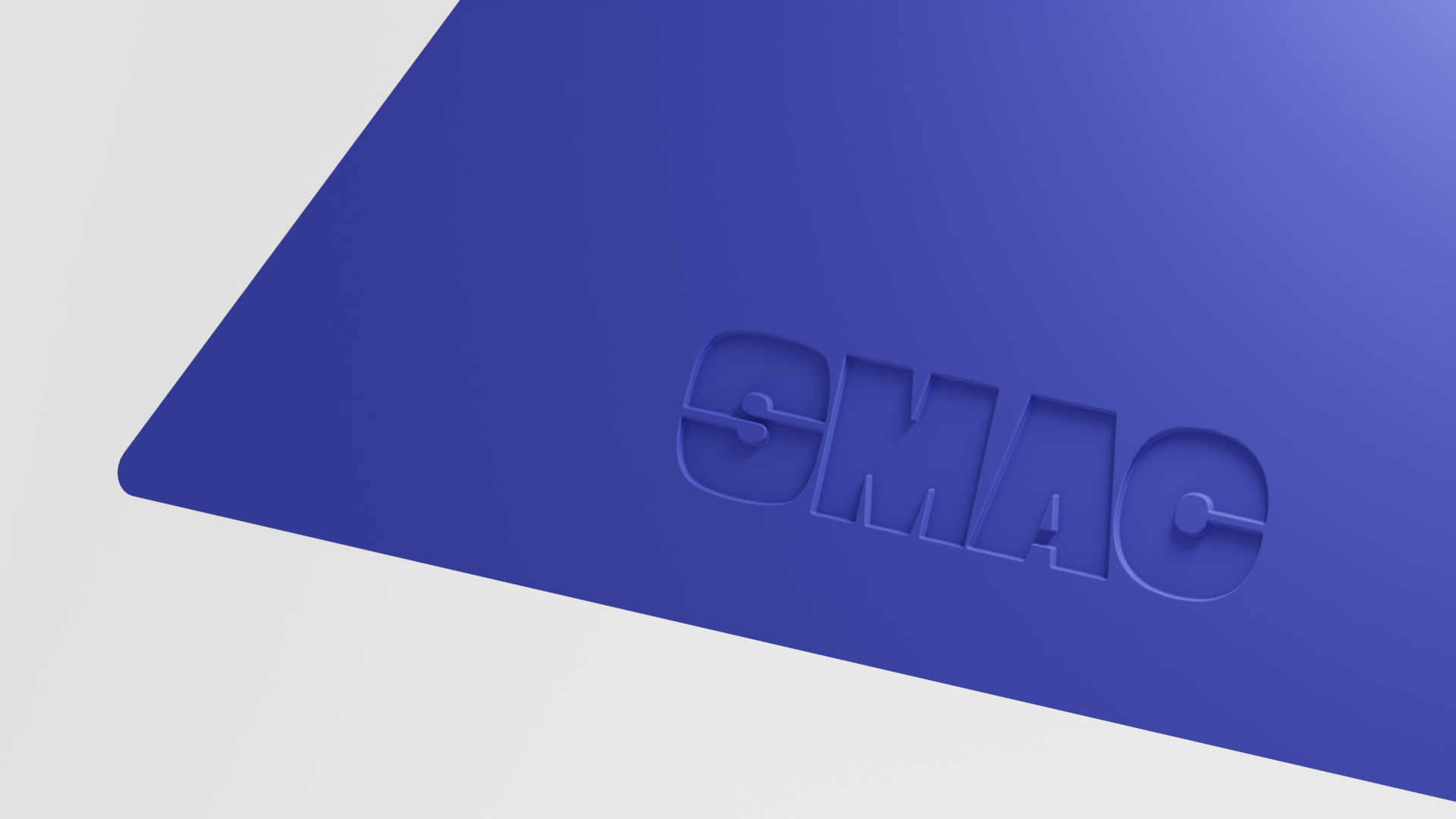
The SMAC visual identity combines:
bold geometric typography, vibrant color blocking, playful layouts, soft rounded forms
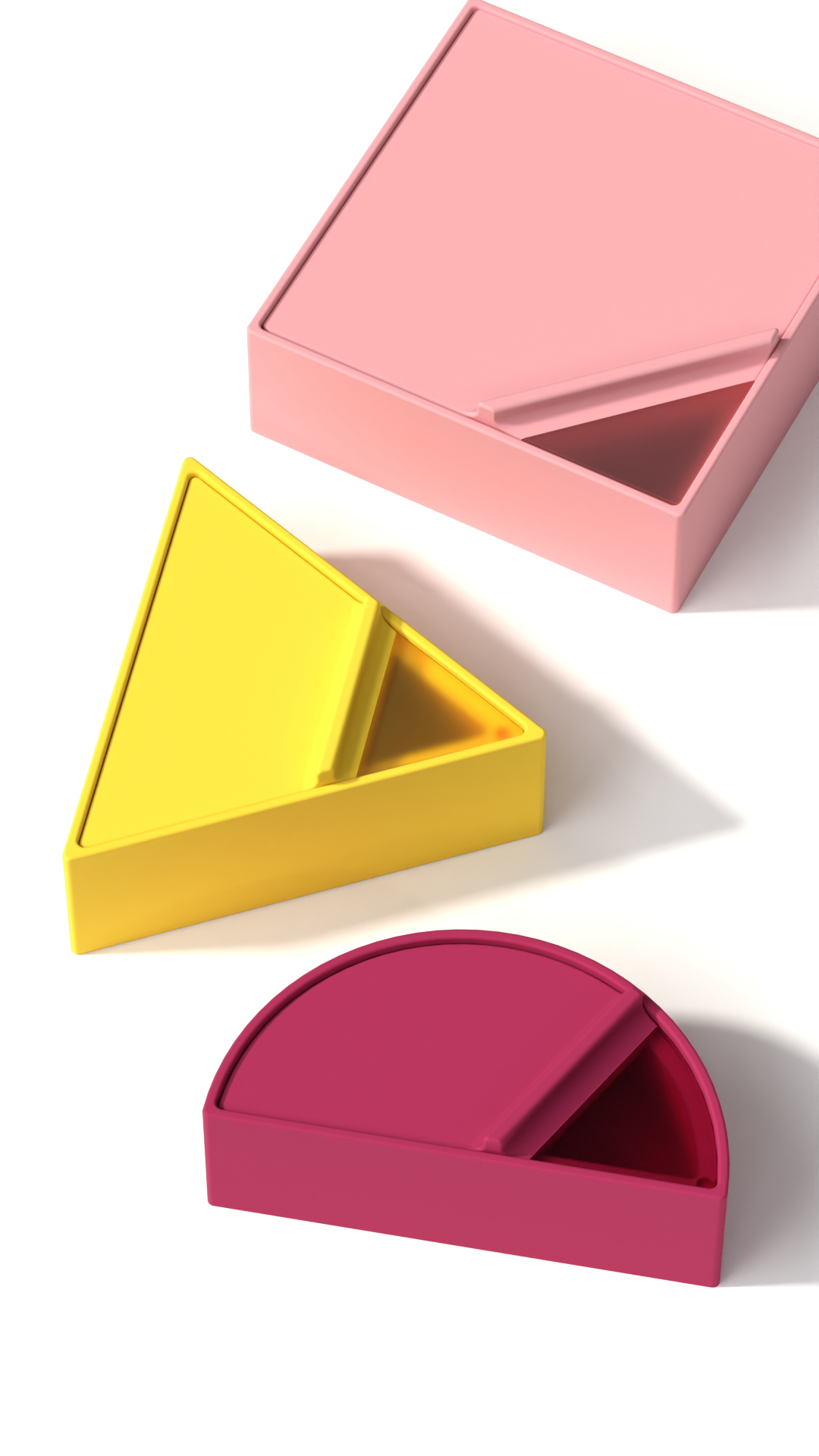
“Stack it. Snack it.”
captures both the modular interaction and the casual joy of snacking.
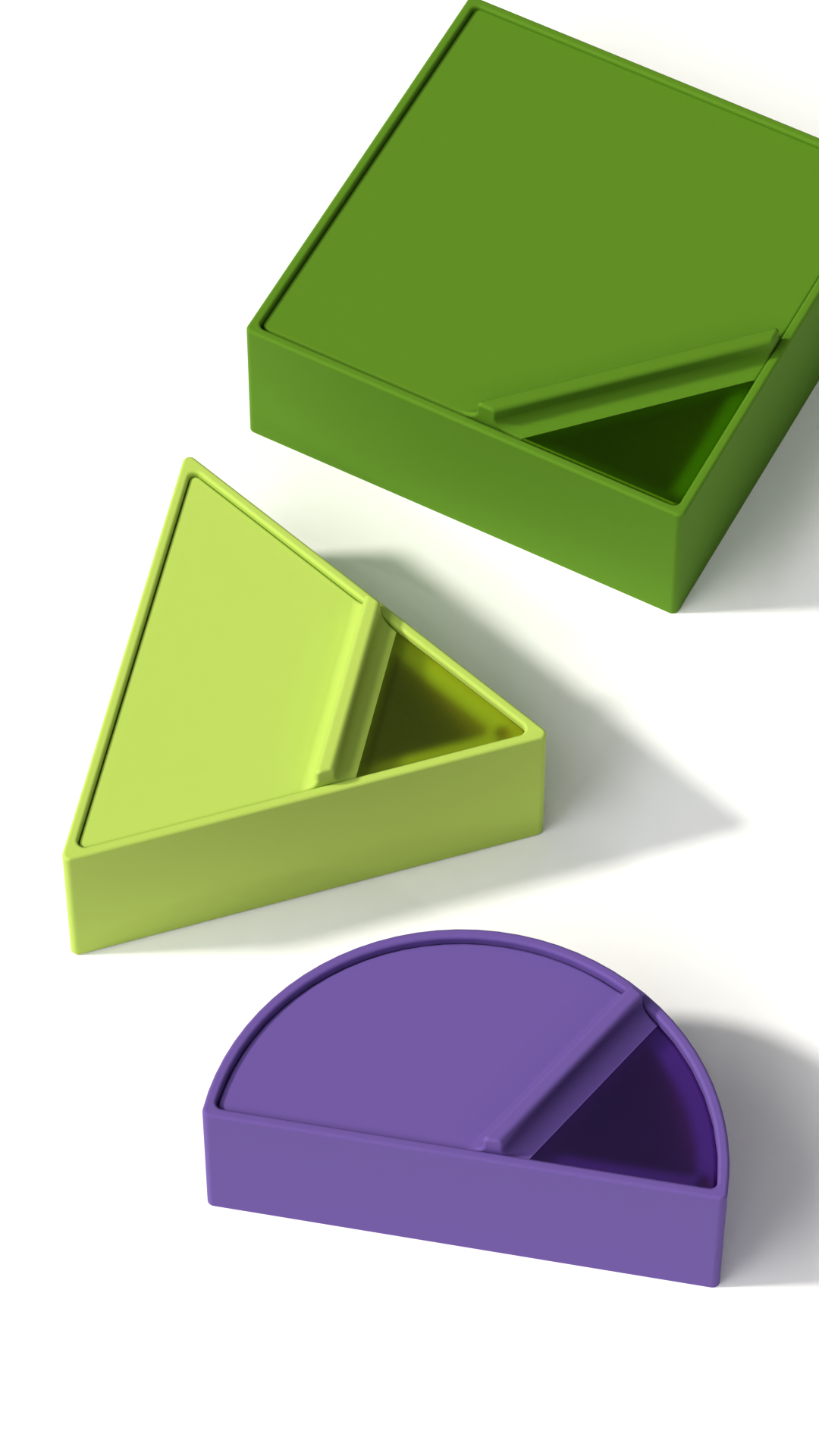
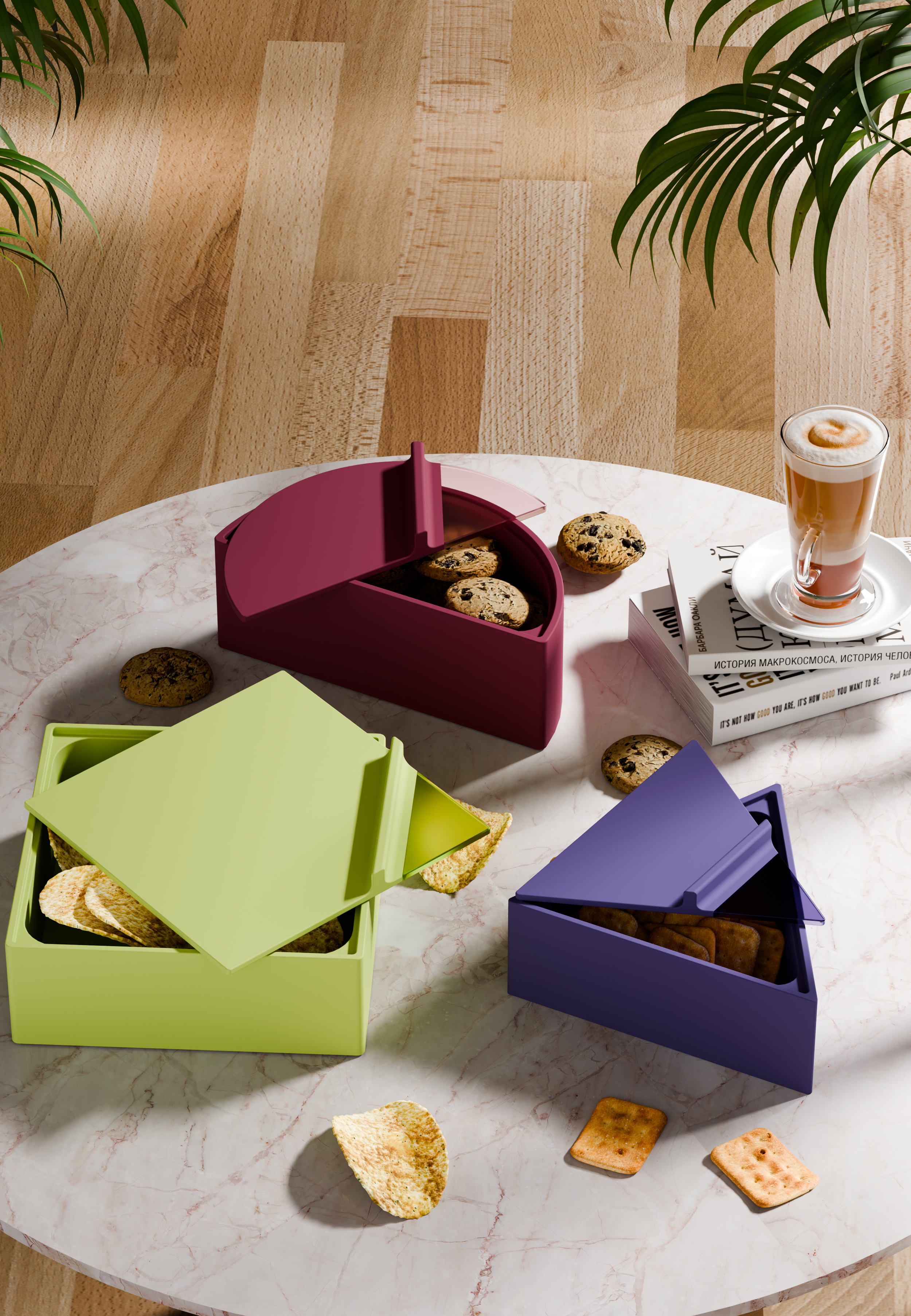
SMAC is designed to exist beyond the kitchen.
The containers function both as: practical snack storage, playful home objects
Users can display them on shelves, coffee tables, or walls as part of their living environment.