❋ Build your work rhythm, not your discipline
InRhythm
What’s missing in remote work?
Remote work offers flexibility, but removes the structure that once defined a workday.
There is no clear start, no natural break, and no clear end.
Work and personal life begin to blend together, making it difficult to feel when the day actually begins or ends.
❋ Most tools assume that remote workers lack focus or self-control.
❋ In physical work environments, these signals are everywhere. In remote work, they disappear.
❋ But the real issue is not discipline — it’s the absence of signals that guide behavior.
Rebuilding the structure of a workday
InRhythm introduces a signal-based system that helps users:
Enter work with intention
Move through a natural rhythm
Transition out of work clearly
Instead of enforcing behavior,
it reshapes the environment to guide it.
InRhythm does not rely on timers, task lists, or restrictions.
Instead, it uses:
Visual changes to express time
Subtle cues to guide transitions
A low-pressure environment to support autonomy
The goal is not to make users more productive,
but to help them feel their workday.
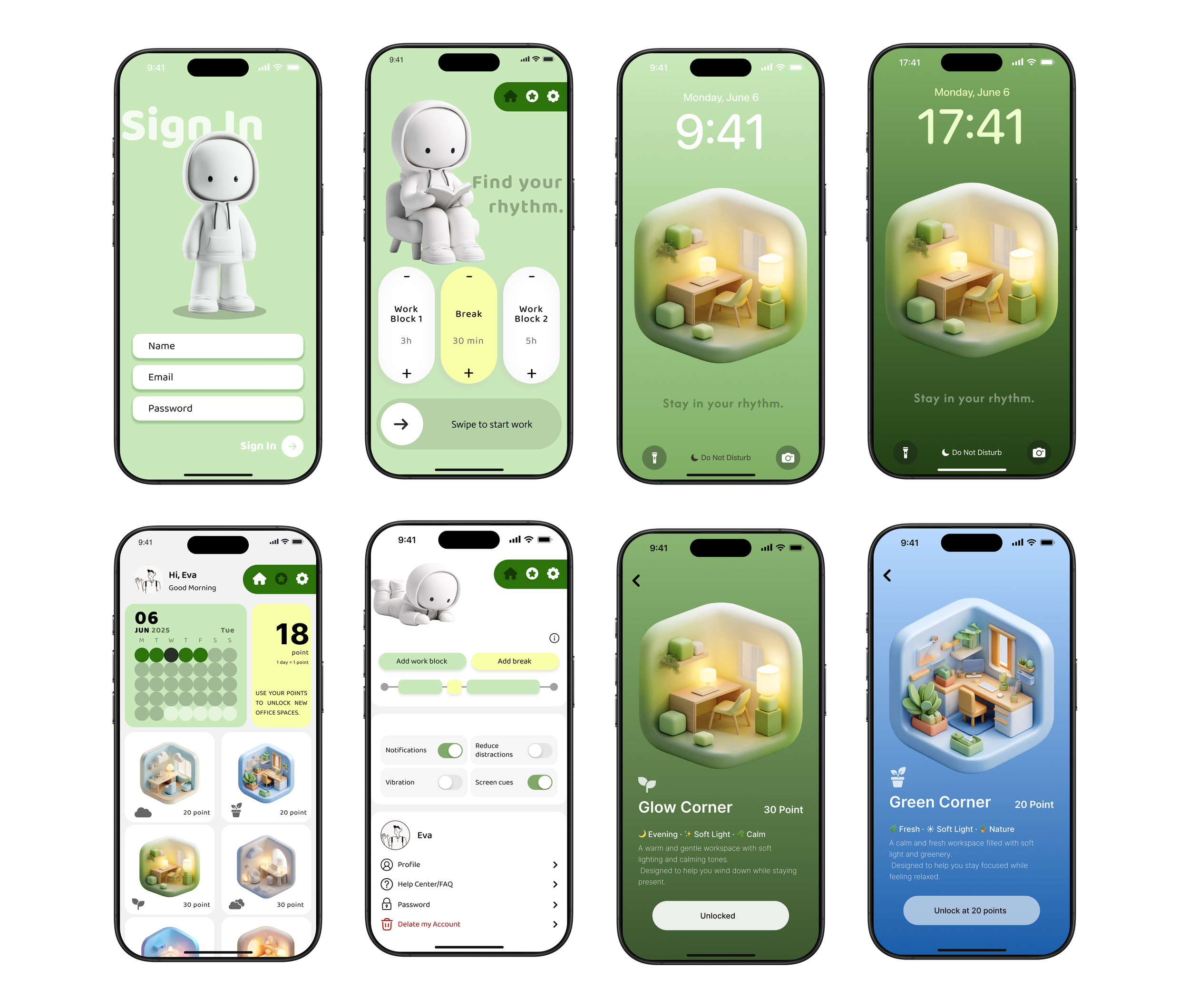
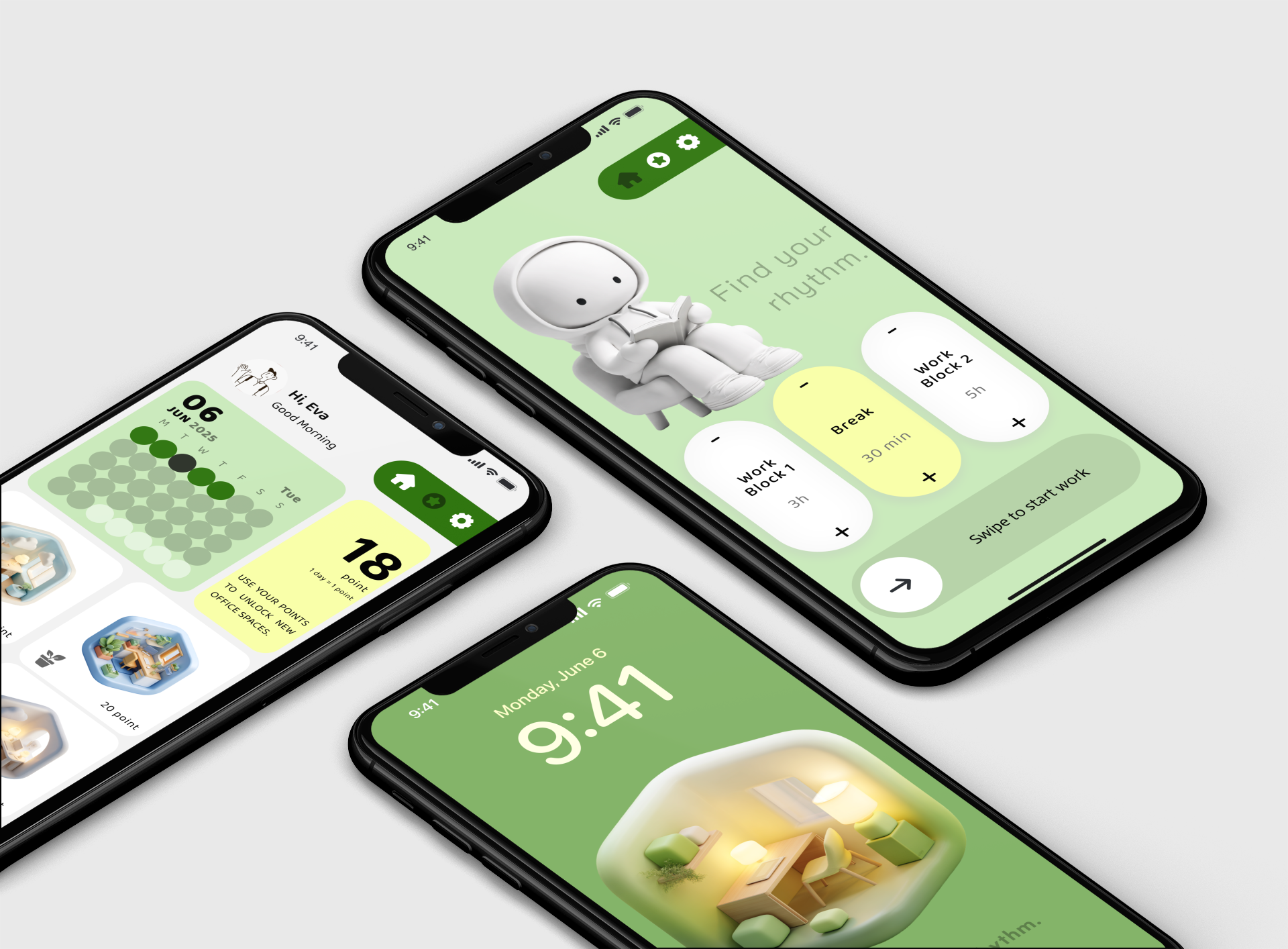
Follow work blocks
Environment changes over time
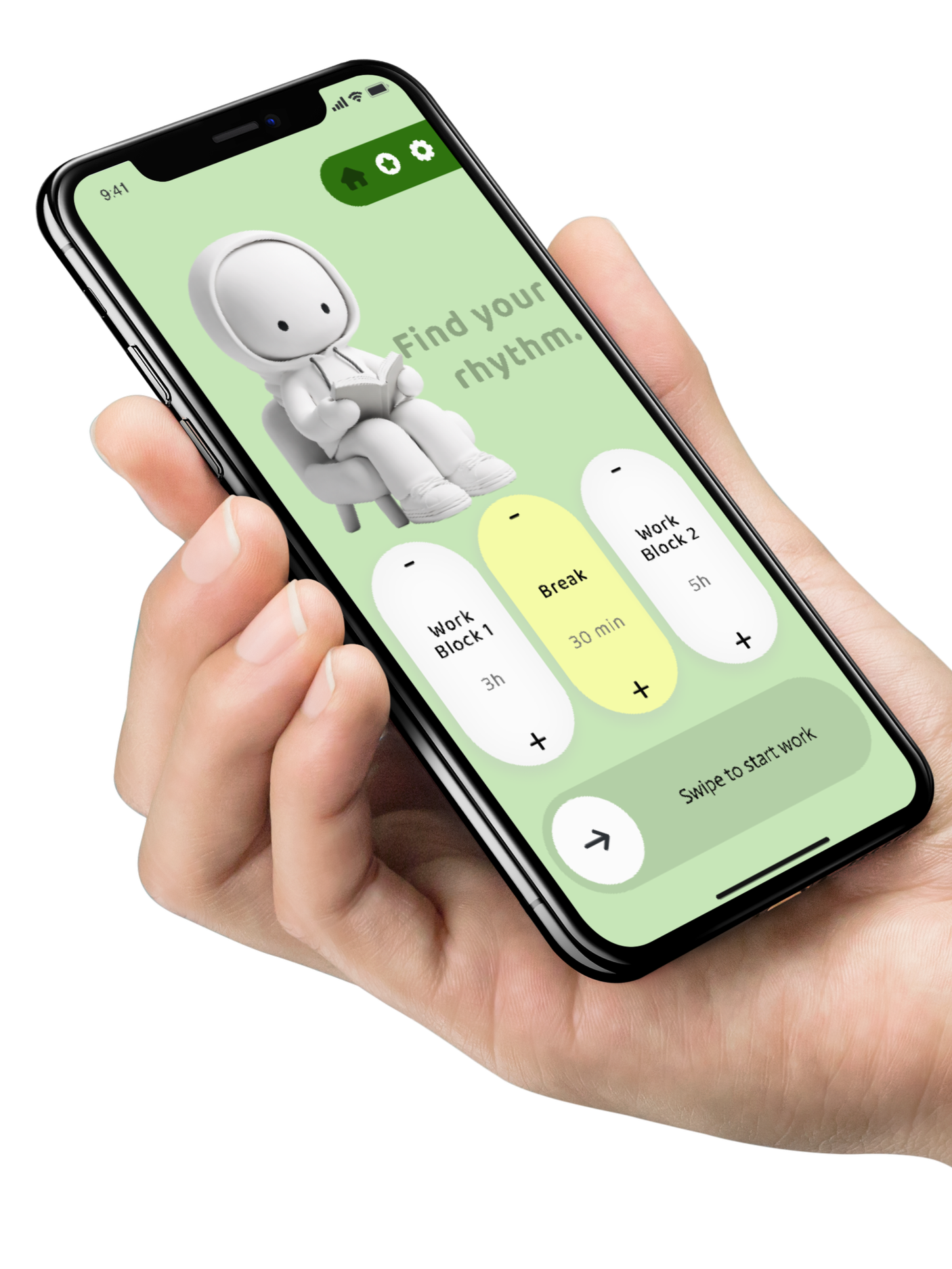
Move through two work sessions and a break
→ Work → Break → Work
→ No strict enforcement
Define your workday structure
Swipe to begin your day
→ Enter Work Mode
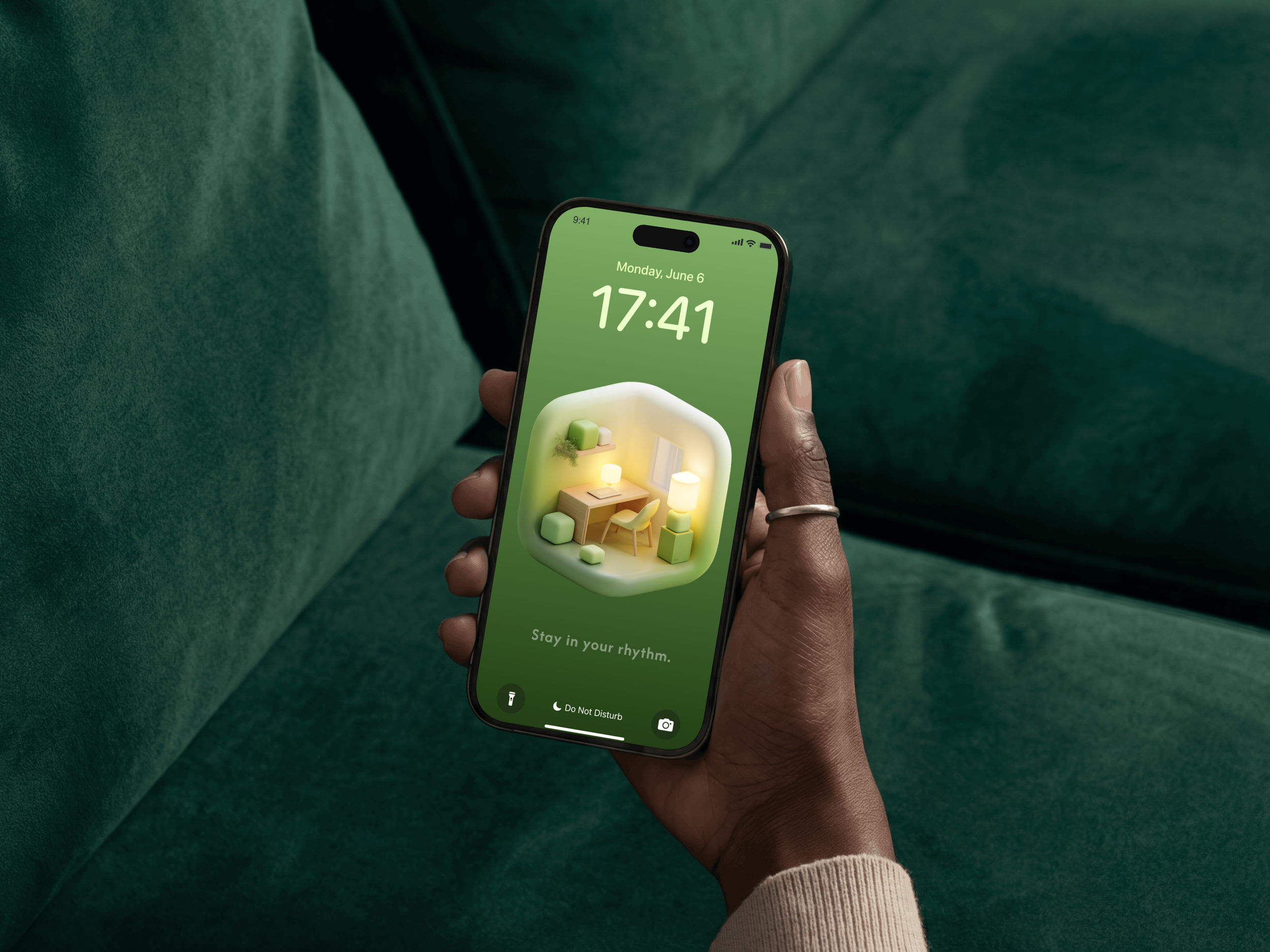
→ Lock screen becomes a virtual workspace
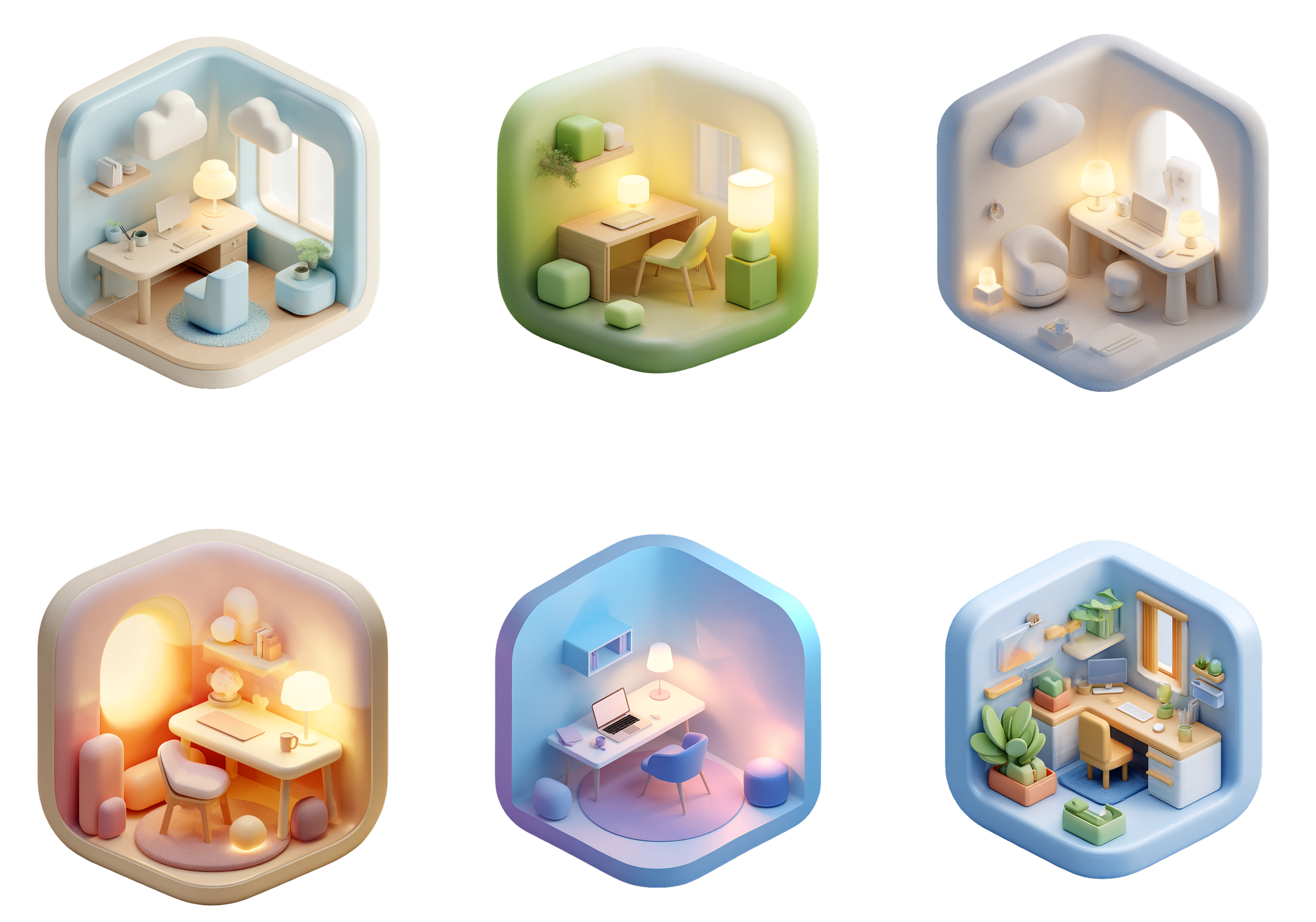
Earn and unlock spaces
Build consistency over time
→ 1 day = 1 point
→ Unlock new virtual offices
Track your rhythm
View your activity through a calendar
→ See which days you worked
→ No productivity tracking
Designed for perception, not control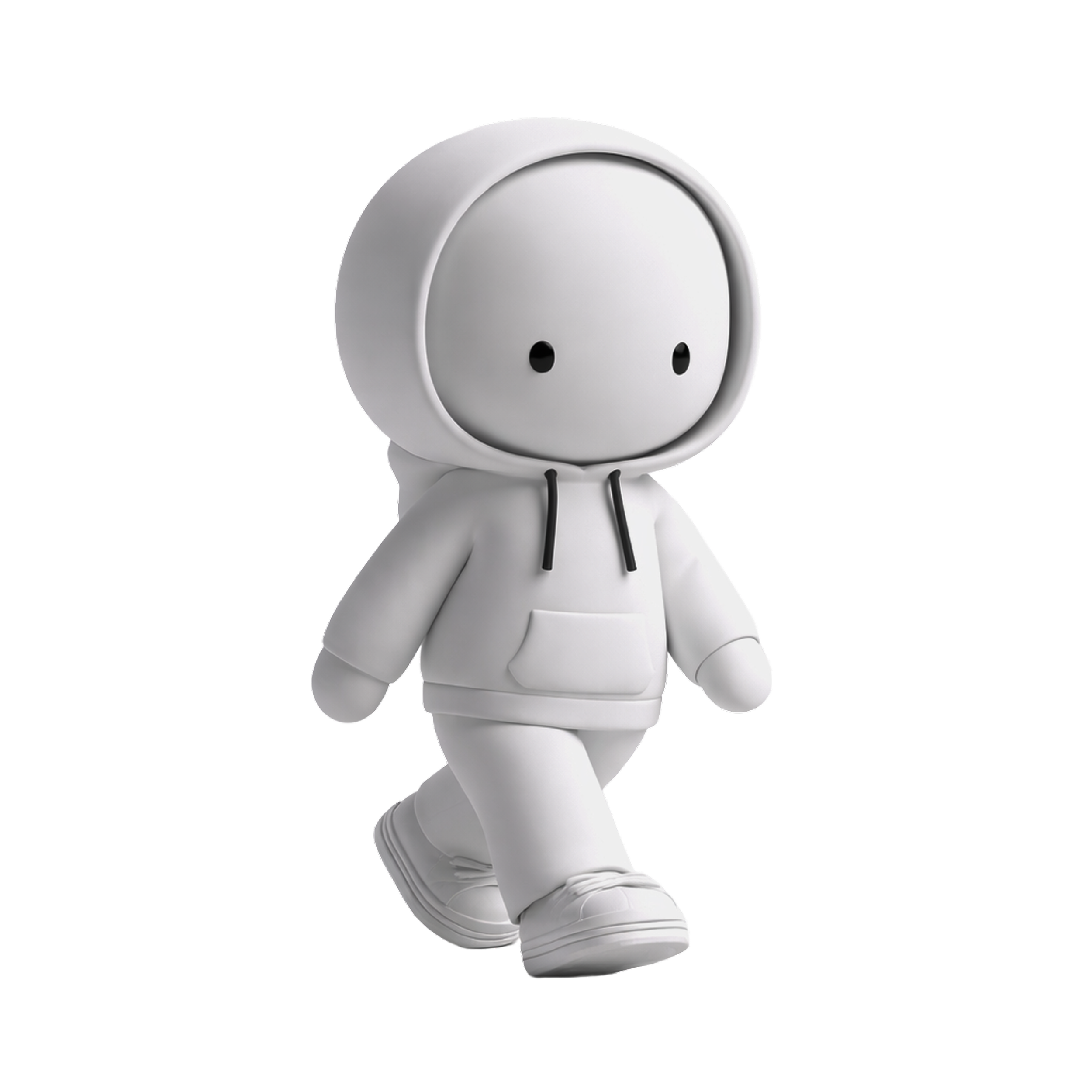
A softer presence
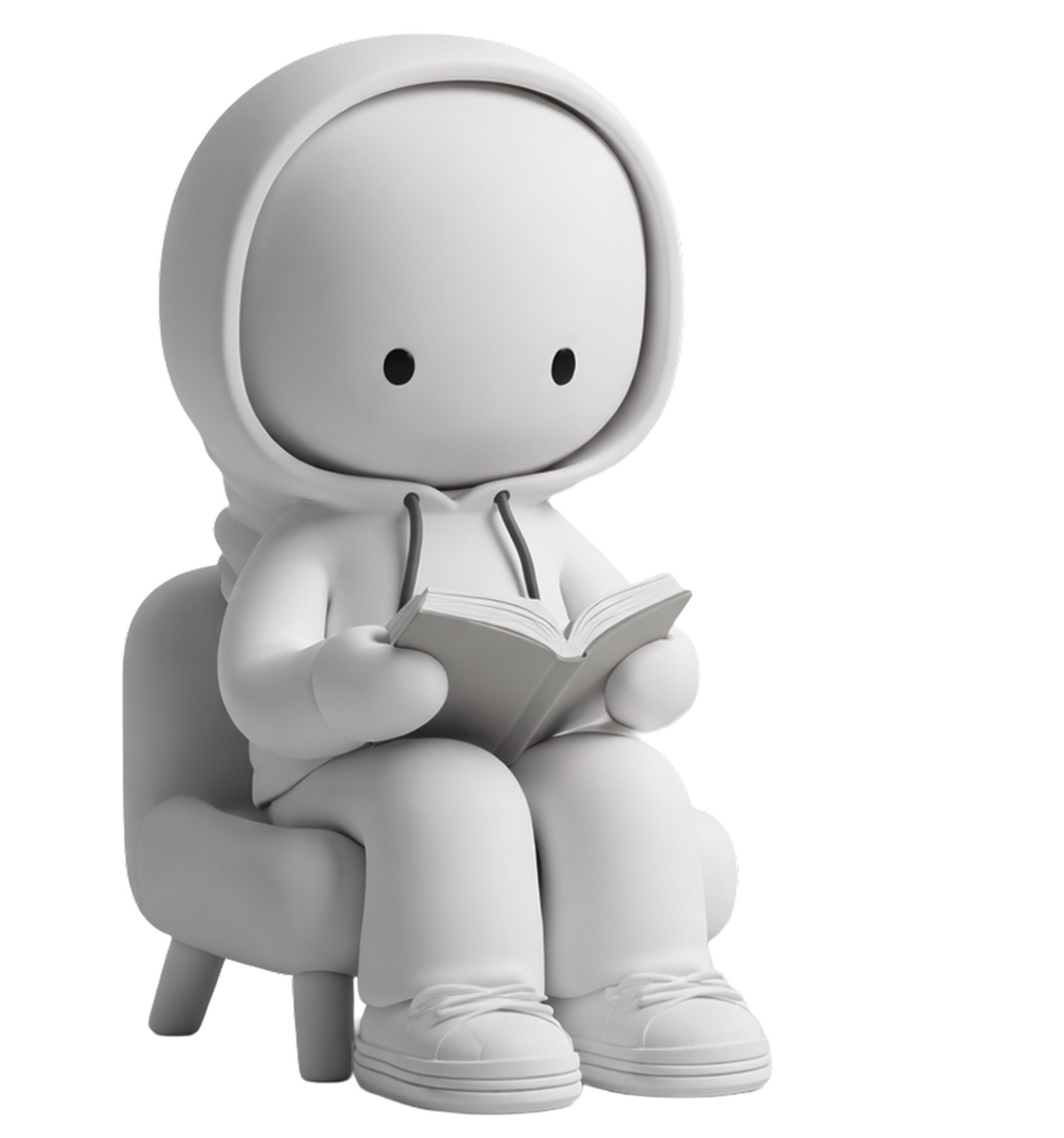
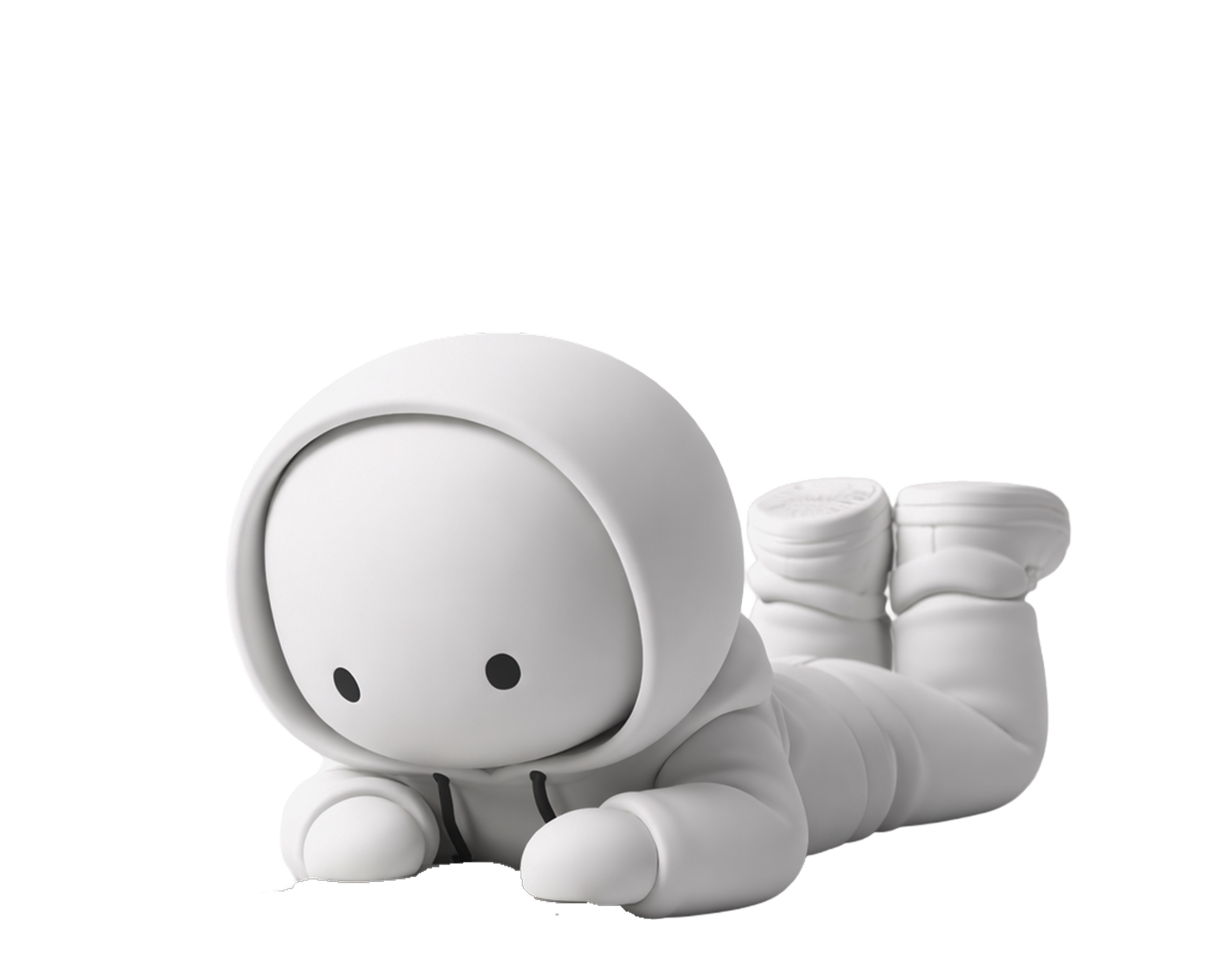
The character represents the emotional tone of InRhythm.
Designed with soft 3D forms, rounded edges, and minimal facial features,
it creates a calm and non-intrusive presence throughout the experience.
Instead of feeling like a tool or system,
the app feels more like a quiet companion —
one that walks alongside the user without pressure or judgment.
Making rhythm visible
Each day of use is recorded through a calendar system.
Consistency over time unlocks new virtual workspaces,
turning rhythm into something users can see and experience.